Build the fleet around the work.
Ten practical guides for scoping heavy plant by project type, from bulk earthworks and critical lifts to mine support, renewable energy civils and disaster recovery. Each explains what drives the fleet and what suppliers need to know.
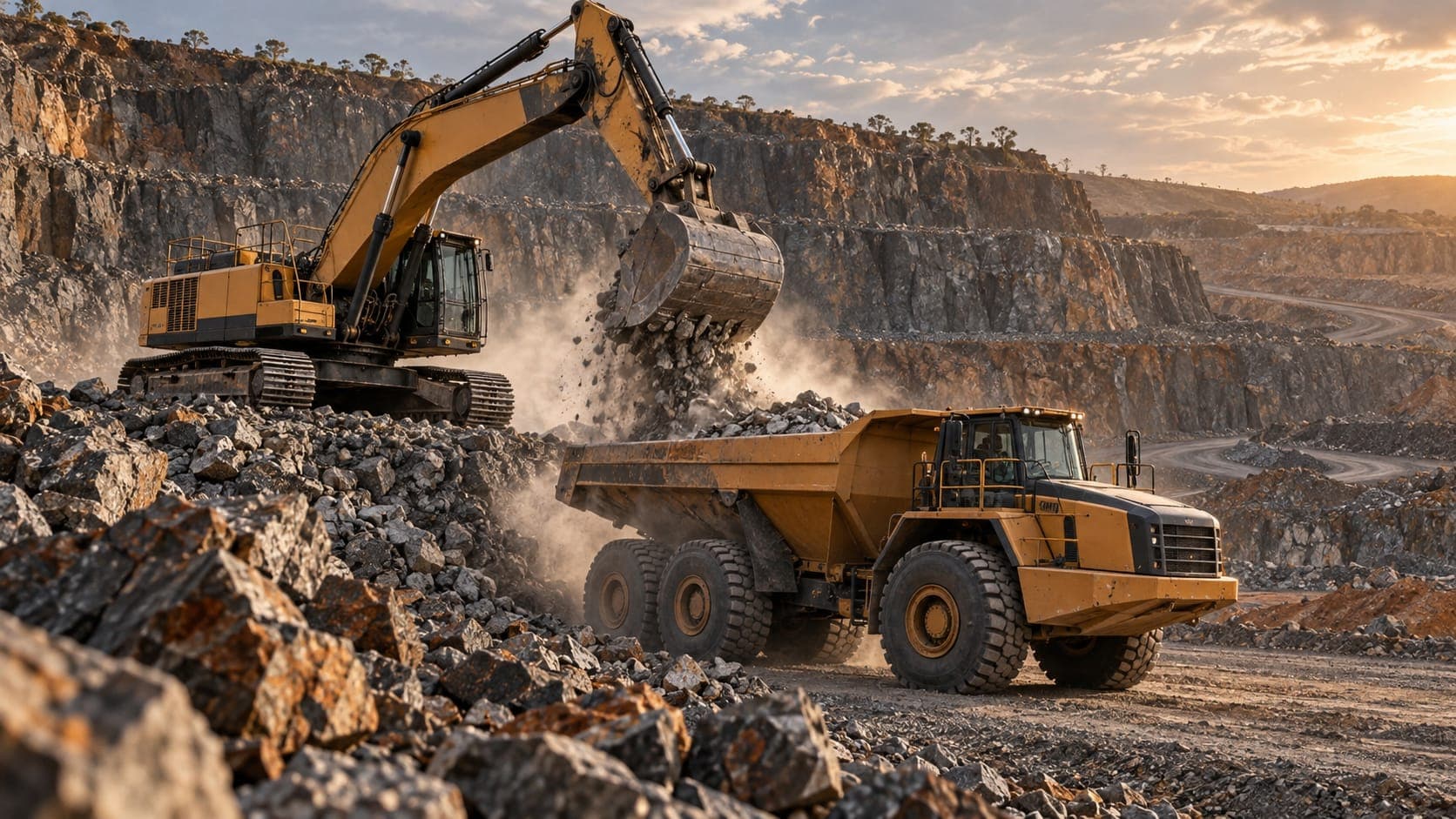
Bulk earthworks plant planning
How to size a cut, load, haul and trim fleet for bulk earthworks in Australia, from material and haul distance to truck matching and compaction.
Read the guide
Mine-site support fleets
Planning hired support plant for Australian mines: mine-spec requirements, site acceptance, rosters, maintenance and remote logistics.
Read the guide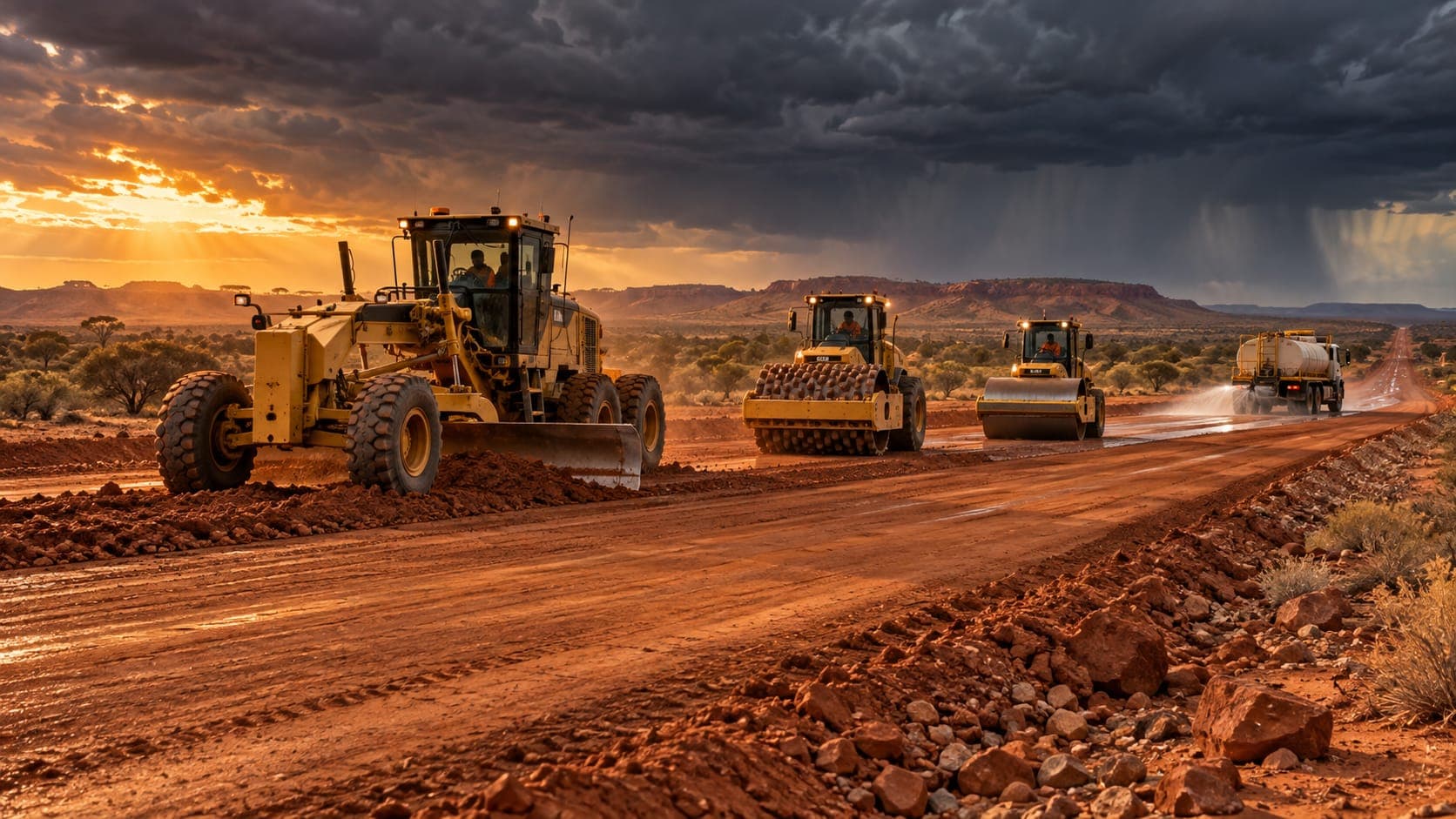
Major roadworks equipment
Planning roadworks plant in sequence: clearing, formation, drainage, stabilisation, paving and compaction, with traffic staging and night works.
Read the guide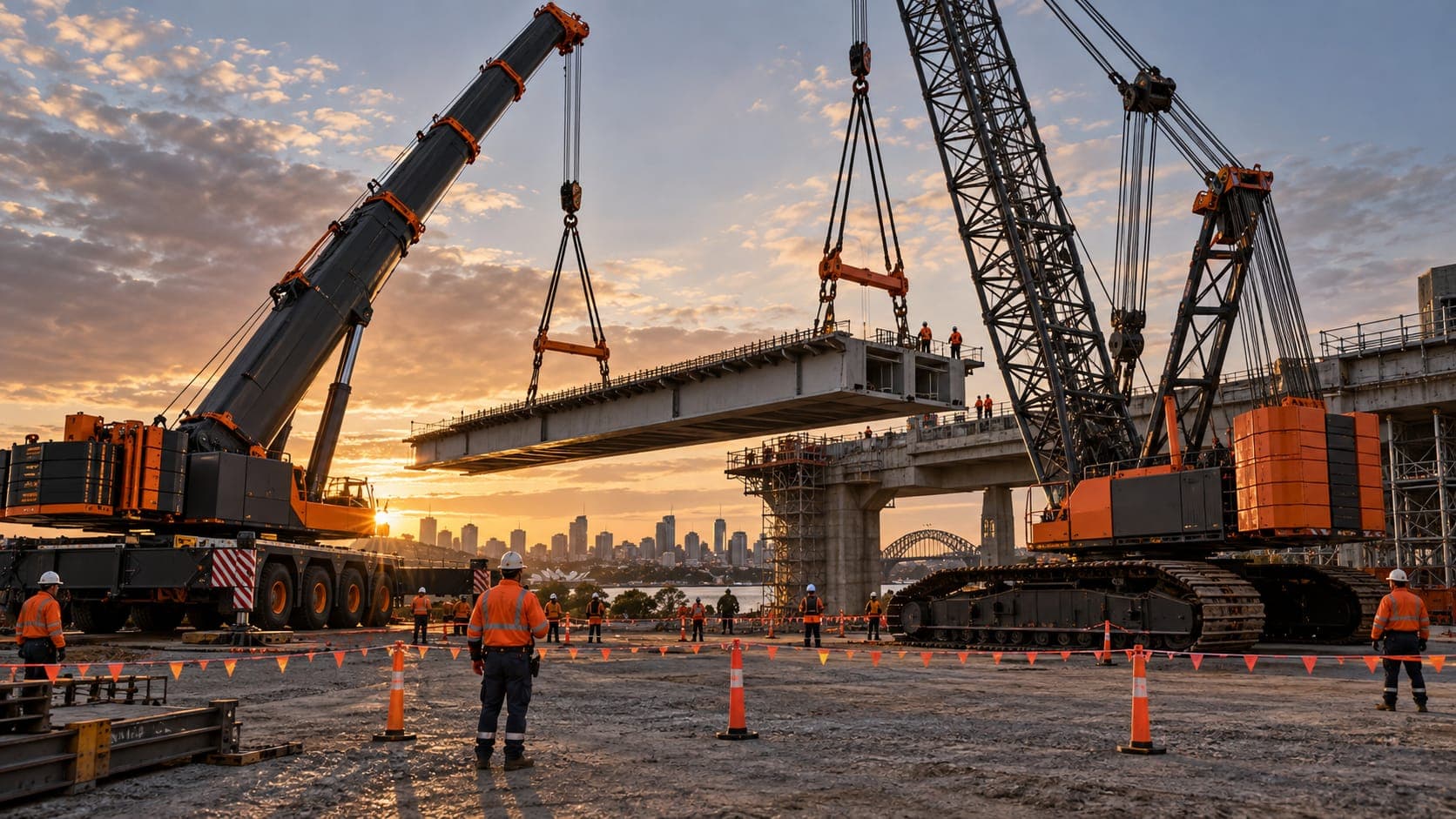
Critical lift readiness
What to prepare before hiring a crane for a critical lift: verified load data, radius, configuration, ground bearing, exclusion zones and the lift team.
Read the guideQuarry production fleets
Hiring quarry plant around the crushing circuit: face loading, haulage, feed rates, stockpile management and the wear costs of abrasive rock.
Read the guideRail formation works
Planning earthworks and support plant for rail formation: possessions, narrow corridors, rail-network access rules, formation quality and recovery plans.
Read the guide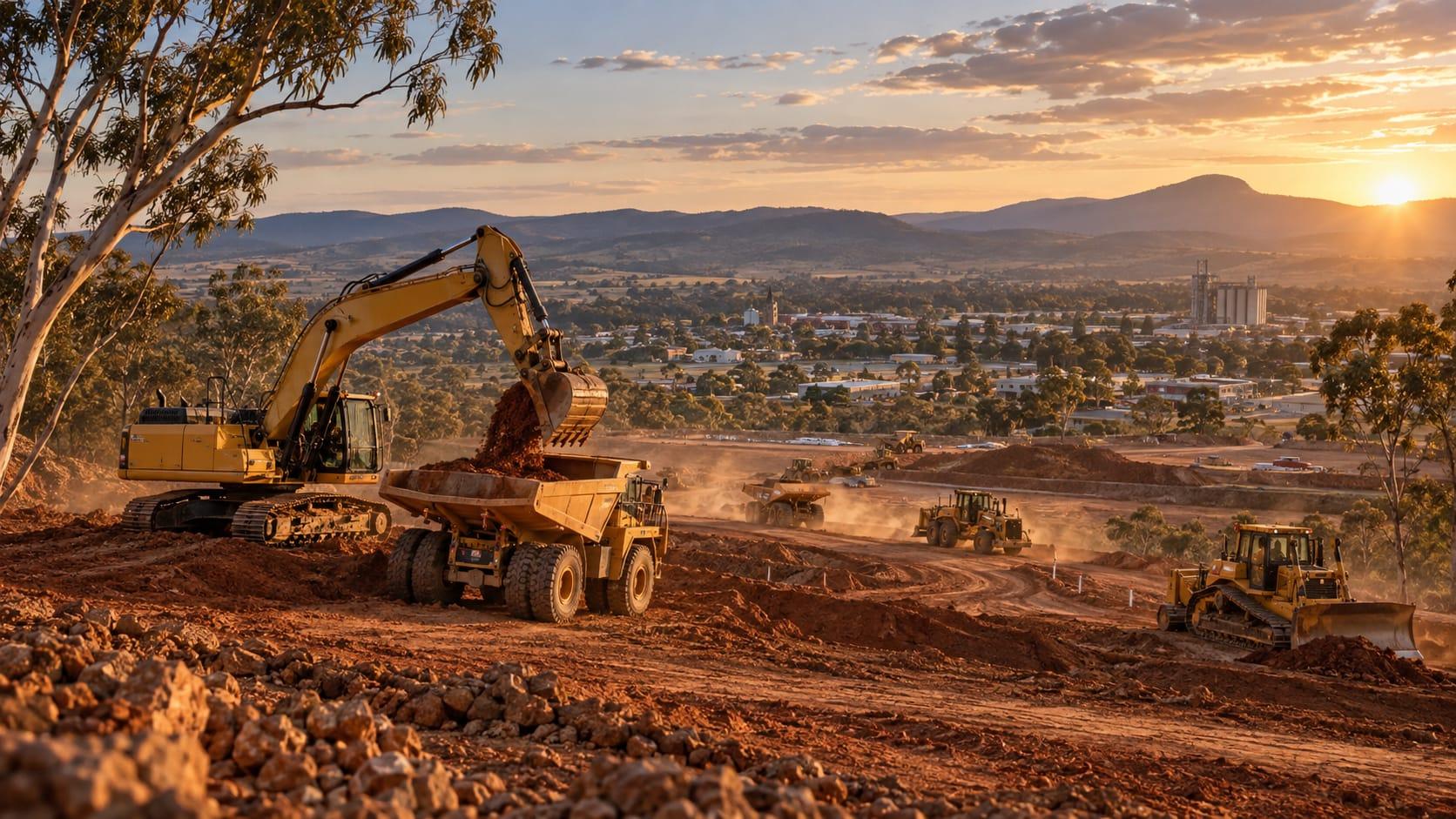
Renewable energy civils
Plant for wind and solar farm civils: access roads, crane hardstands, cable trenching, pile installation and heavy-haul component delivery on remote sites.
Read the guideDam and water infrastructure
Selecting excavation, compaction and dewatering plant for embankments, pipelines, reservoirs and hydraulic structures in Australian water projects.
Read the guidePort and industrial projects
Hiring cranes, earthmoving and materials-handling plant for operating ports, refineries and industrial sites with strict permits and interfaces.
Read the guide
Disaster recovery plant
Mobilising plant quickly and safely after floods, fires and storms: route status, debris handling, crew welfare, fuel security and emergency contracting.
Read the guide