Bulk earthworks is a production business. The fleet that wins is not the one with the biggest excavator, but the one where every machine in the cycle — loading, hauling, spreading, trimming and compacting — works at a similar rate so nothing waits. This guide walks through the inputs that decide that balance and how to present them to plant suppliers.
Editorial planning guidance with illustrative scenarios. No independent professional review is claimed. Read the authorship and evidence policy or report a correction.
Start from the earthworks balance
Before thinking about machines, confirm the cut and fill quantities, the location of each cut and fill zone, and whether the job is balanced, has a surplus to export, or needs imported fill. The mass-haul diagram or a simple zone-to-zone quantity table tells a supplier more than any machine list, because it sets haul distances and the direction of travel for most of the project.
Quantities should be stated in bank (in-situ) cubic metres with a note on the expected bulking and compaction factors. A clay that bulks by 25–30% when excavated needs noticeably more truck capacity than the bank volume suggests, and the same material may need moisture conditioning before it will compact to specification.
Material decides the digging and ripping plan
Geotechnical logs, test-pit photos and any seismic refraction results should go to suppliers early. Soft to firm clays and sands suit direct excavator or scraper loading. Weathered rock may need a dozer with a single-shank ripper ahead of the loading unit, and competent rock may push the job toward hammering or drill and blast — each changes the fleet and the cost per cubic metre substantially.
Wet materials change the answer again. Saturated clays can make articulated dump trucks the only practical haul unit, while dry, trafficable ground may allow higher-speed rigid trucks or motor scrapers on longer hauls.
Match the loading unit to the trucks
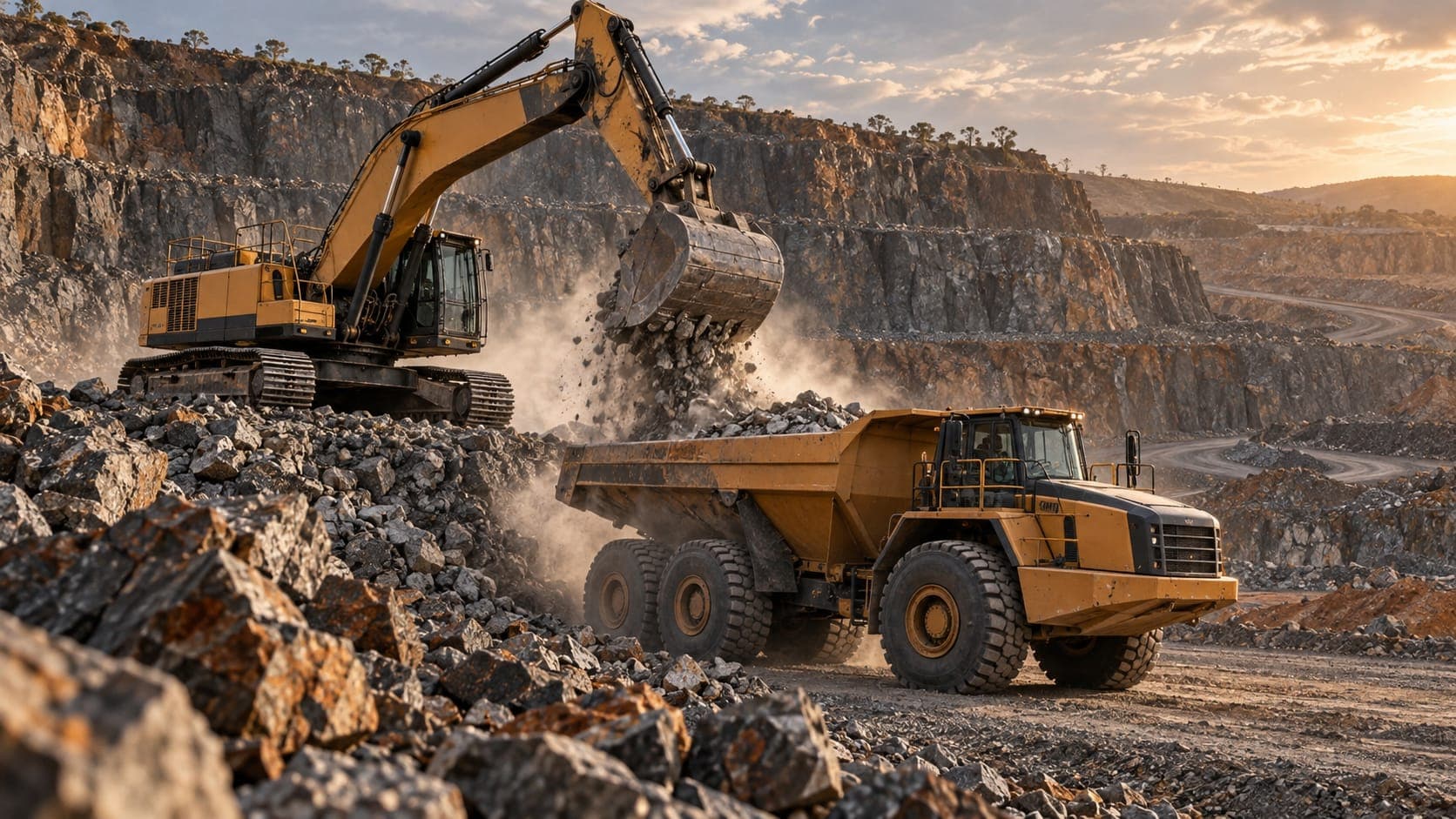
The classic rule is to fill a truck in roughly three to five passes. Too few passes usually means the excavator is oversized for the trucks and spills; too many means trucks queue at the face. Give suppliers the planned truck class so they can recommend a bucket size, or ask them to propose the pair together.
Work out the number of trucks from the cycle time: load time, loaded haul, dump, return and any queuing. Hauls with steep ramps, soft haul roads or public road crossings lengthen the cycle and are often underestimated at tender.
- Articulated dump trucks: soft ground, steep or tight haul roads, wet seasons
- Rigid trucks: longer, well-maintained haul roads with good drainage
- Motor scrapers: long, flat hauls in scrapable material where load and haul is one machine
Plan spreading, trim and compaction as part of the cycle
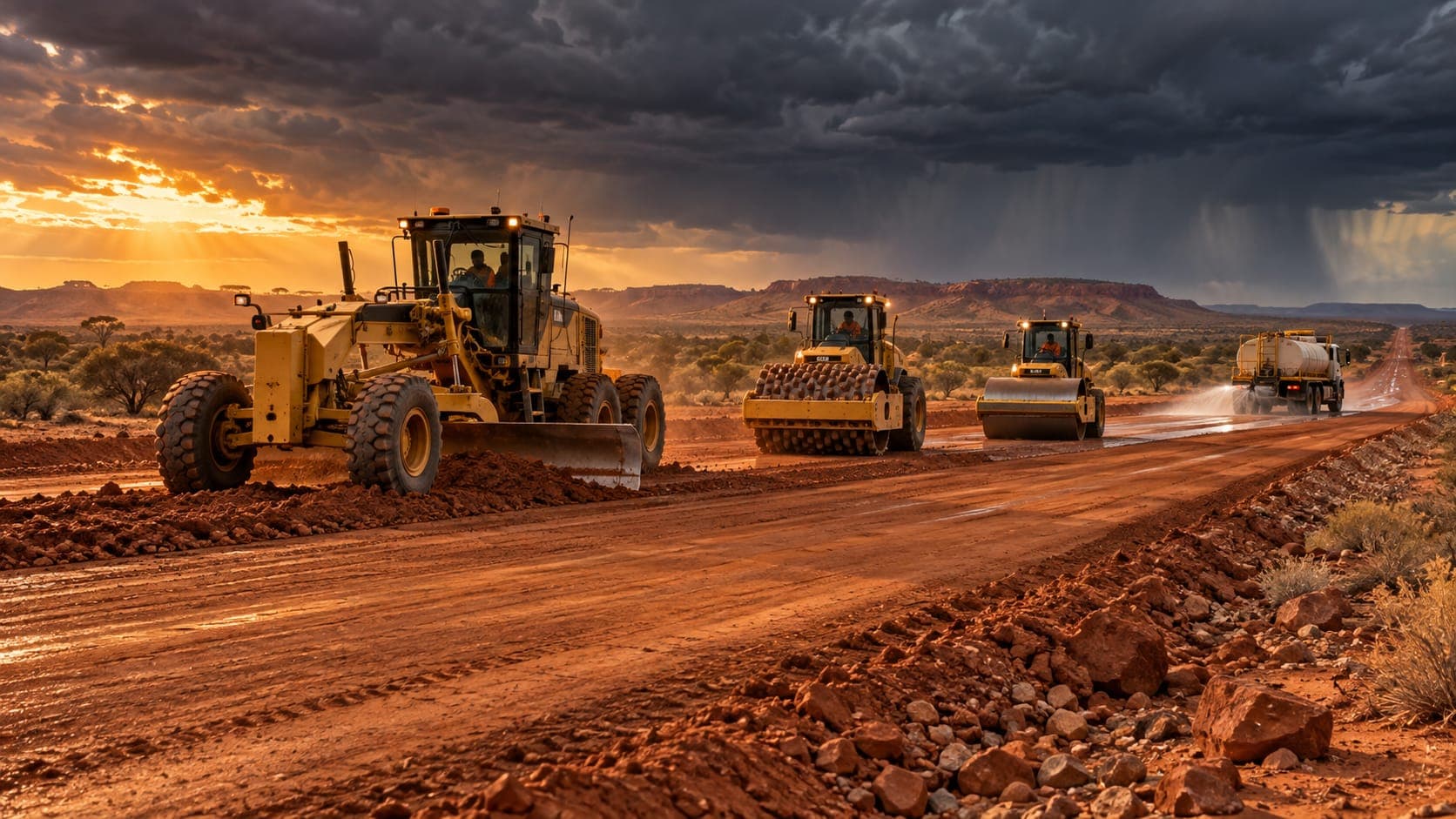
Fill placement is where production often stalls. A dozer or grader has to spread each load to the specified layer thickness, a water cart has to bring the material to optimum moisture, and the roller has to achieve density before the next layer arrives. If the compaction side cannot keep up, the whole loading fleet slows to its pace.
Confirm layer thickness, compaction specification, testing frequency and who engages the geotechnical testing authority. Ask suppliers whether they can provide GPS machine control for dozers, graders and excavators, and who supplies the design model and site base station.
Haul roads, water and support plant
Haul road construction and maintenance is a fleet in itself. A grader and water cart dedicated to haul roads protect cycle times, tyres and dust compliance. Include lighting towers for extended shifts, a service truck, fuel supply and a light vehicle plan in the enquiry so the supplier can price a complete package.
Machine classes for Australian bulk earthworks
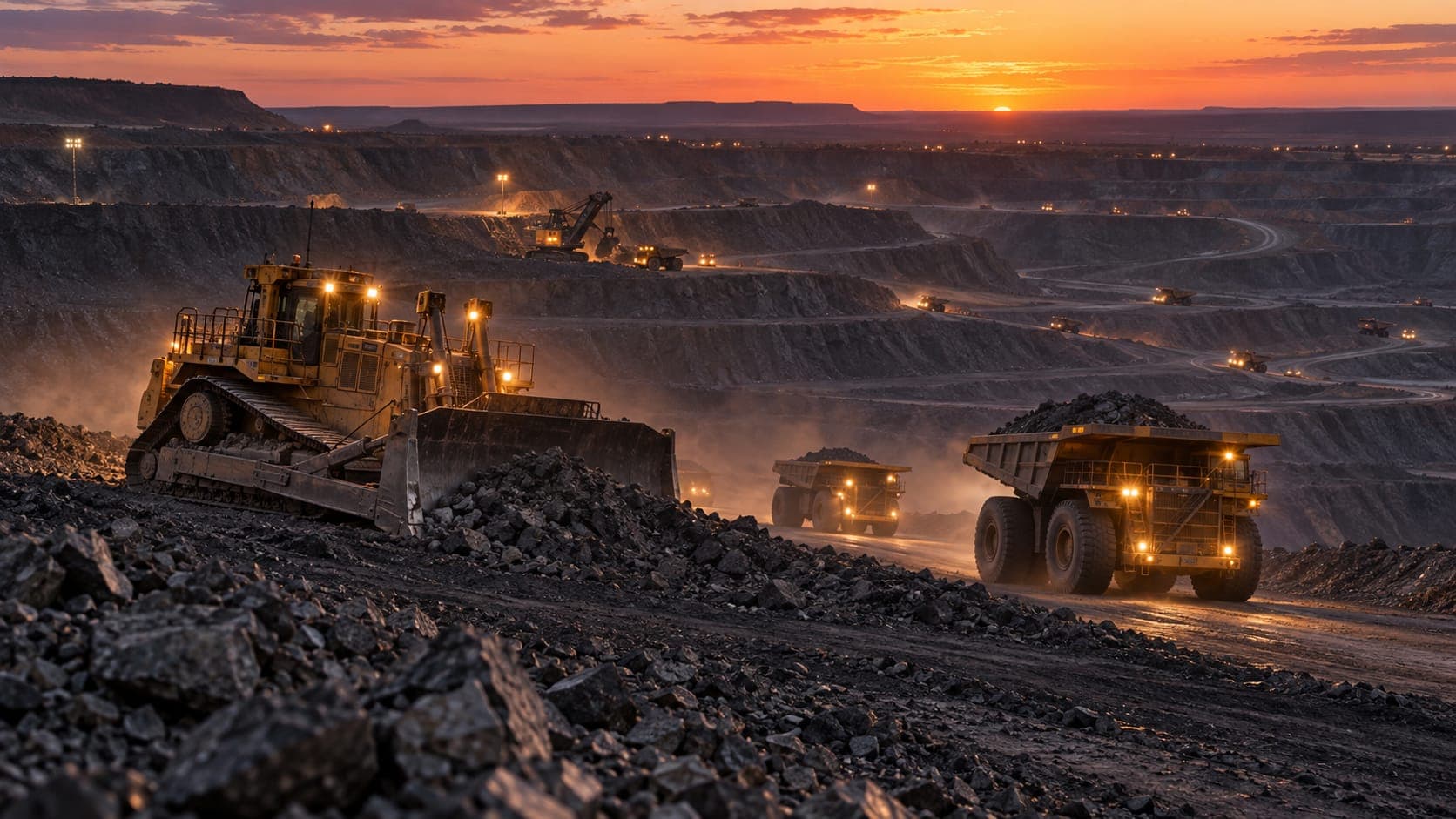
On most Australian civil jobs the loading unit is a 20–25 tonne excavator for smaller cuts and a 30–36 tonne machine once daily volumes climb into the thousands of cubic metres. Large subdivisions, highway cuttings and dam embankments often run 45–50 tonne excavators, with D6-class dozers for spreading and a D8-class dozer where material needs ripping or heavy pushing. Articulated dump trucks in the 30 and 40 tonne classes are the default haul units on wet or undulating ground; rigid quarry trucks appear on long, well-maintained haul roads.
On the fill side, 12–14 series graders trim to level, 12–20 tonne pad-foot rollers compact clay, 10–12 tonne smooth-drum rollers handle granular layers, and one or more 13–15 kL water carts keep material at optimum moisture. In summer, on reactive clays, water supply is often the constraint: confirm where carts will fill and how long each round trip takes.
| Class (operating weight) | Typical bucket | Common uses |
|---|---|---|
| Mini, 1–2 t | 0.03–0.08 m³ | Landscaping, services trenching, tight access |
| Midi, 5–8 t | 0.15–0.3 m³ | Residential civil, drainage, small bulk work |
| 12–14 t | 0.4–0.6 m³ | Subdivision services, pipelines, general civil |
| 20–25 t | 0.9–1.3 m³ | The civil workhorse: bulk dig, truck loading, detailed excavation |
| 30–36 t | 1.5–2.2 m³ | Bulk earthworks, loading ADTs, heavy trenching |
| 45–50 t | 2.5–3.5 m³ | Major bulk earthworks, rock, quarry support |
| 70 t and above | 4 m³ and up | Mass excavation, quarry and mining production |
What a bulk earthworks fleet costs to run
A modest balanced fleet — a 30 tonne excavator, three 30 tonne ADTs, a D6 dozer, a pad-foot roller and a water cart — can easily run to $1,000–$1,300 per hour wet before mobilisation, supervision and survey. That is why production matters so much: a fleet moving 150 bank cubic metres per hour costs roughly twice as much per cubic metre as one moving 300. Use the indicative rates below to sanity-check quotes, and always convert them to a cost per cubic metre for your haul.
| Machine | Project quote |
|---|---|
| Excavator 5–8 t | Request a project-specific written quote |
| Excavator 12–14 t | Request a project-specific written quote |
| Excavator 20–25 t | Request a project-specific written quote |
| Excavator 30–36 t | Request a project-specific written quote |
| Excavator 45–50 t | Request a project-specific written quote |
| Dozer D6 class | Request a project-specific written quote |
| Dozer D8 class | Request a project-specific written quote |
| Grader 12–14 class | Request a project-specific written quote |
| Smooth-drum or pad-foot roller 10–12 t | Request a project-specific written quote |
| Articulated dump truck 30–40 t | Request a project-specific written quote |
| Water cart 13–15 kL | Request a project-specific written quote |
| Truck and dog | Request a project-specific written quote |
Sample supplier brief
A short written brief gets faster, more comparable quotes. Adapt this example to your job:
“We need a wet-hire earthworks fleet for a 45,000 bank m³ cut-to-fill on a residential subdivision near Toowoomba, QLD. Material is stiff clay over weathered basalt; test pit logs attached. Maximum haul is 650 m, average 400 m, grades up to 8%. Fill is placed in 250 mm compacted layers to 98% standard density with geotechnical testing by others.”
“Please propose a matched fleet with production per day, rates, minimum hours and mobilisation. Work is Monday to Saturday, 6:30 am to 5 pm, starting 3 March for about eight weeks. We supply the design model; please confirm which machines have GPS control.”
Common questions
How do I estimate the number of trucks I need?
Divide the truck cycle time (load, haul, dump, return, queue) by the loading time per truck. The result is the number of trucks one loading unit can keep busy. Add allowance for road condition and breakdowns.
Should bulk earthworks be wet or dry hire?
Many contractors wet hire the specialist or peak-production units and dry hire machines their own operators run every day. The decision rests on operator availability, supervision capacity and who carries maintenance risk.
When are scrapers better than excavators and trucks?
Scrapers can be efficient on long, relatively flat hauls in material they can load, such as sands and loose clays. Short hauls, rock, or very wet ground usually favour excavators and dump trucks.
What is the difference between bank, loose and compacted cubic metres?
Bank cubic metres are the material in the ground before digging. Loose cubic metres are after excavation, when the material has bulked up. Compacted cubic metres are after placement and compaction. Haulage is planned on loose volumes; payment is often on bank or compacted volumes, so be clear which one a quote uses.
How much can a bulk earthworks fleet move in a day?
It ranges from a few hundred to several thousand cubic metres per day depending on fleet size, material and haul distance. Ask suppliers for a production estimate for your specific layout.
This guide is general information to help you prepare a better enquiry. It is not engineering, legal or safety advice. Equipment selection, engineering and safe systems of work remain the responsibility of competent project and supplier teams, and regulatory requirements differ between states and sites.