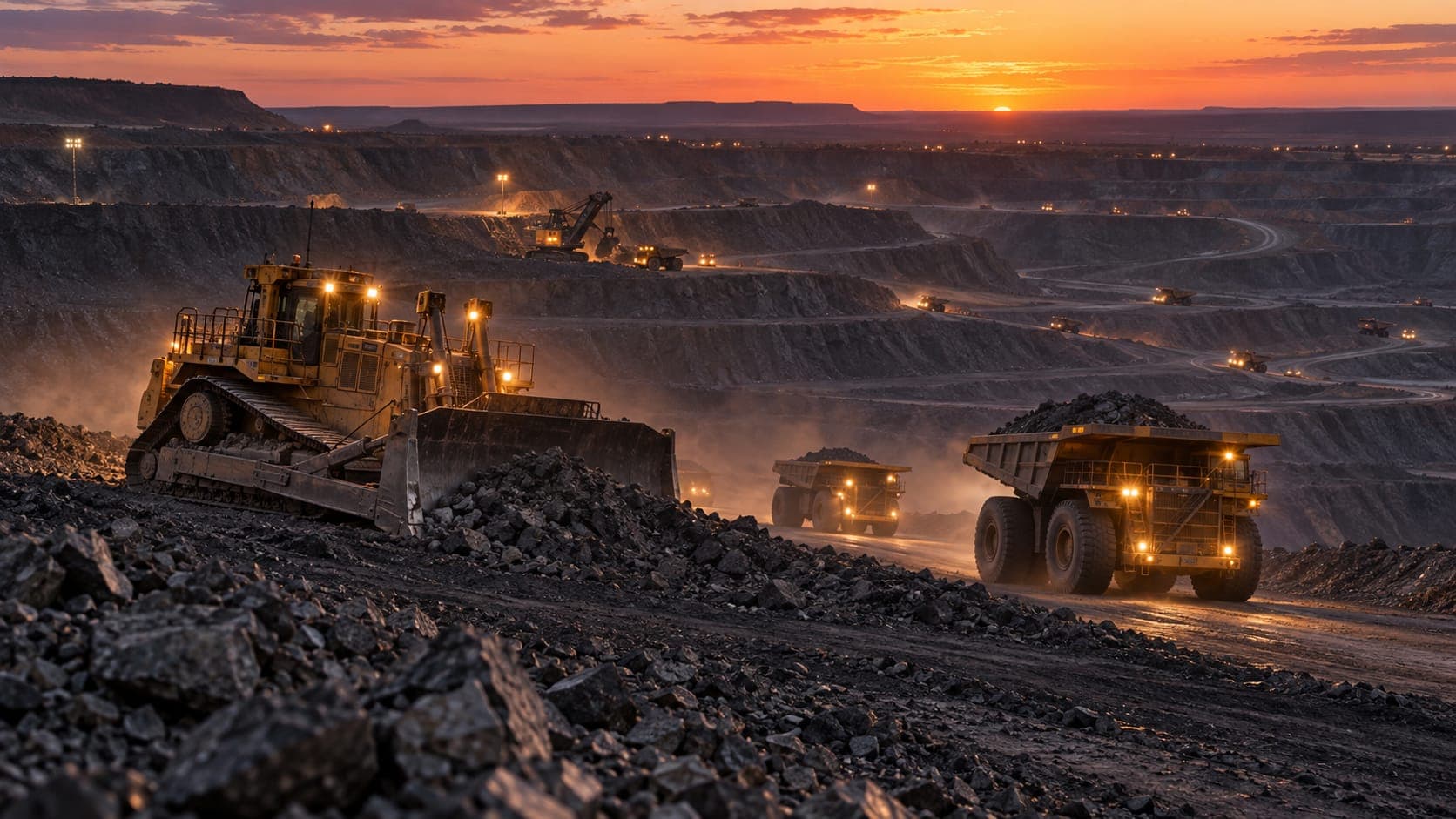
A quarry is a system built around its crushing and screening plant. Every loader, excavator and truck exists to keep the primary crusher fed at its design rate and to move finished product to stockpiles and customers. When hiring quarry plant, start with the circuit and work backwards.
Editorial planning guidance with illustrative scenarios. No independent professional review is claimed. Read the authorship and evidence policy or report a correction.
Feed rate sets the loading and hauling fleet
The crusher's tonnes per hour, adjusted for expected utilisation, is the target for the face fleet. Supply that figure, the distance from face to crusher, and the ramp grades. Suppliers can then recommend loading units and trucks that deliver the feed with some headroom for delays at the face.
Mobile crushing and screening campaigns change the picture: the plant moves toward the face, hauls shorten, and loaders may feed crushers directly.
Face conditions and fragmentation
Blast fragmentation strongly affects loading productivity and crusher throughput. Well-fragmented rock loads quickly; oversize material slows loading and may need a rock breaker. Tell suppliers the rock type, typical fragmentation and whether a hydraulic hammer or secondary breaking is required.
Wear, tyres and operating cost
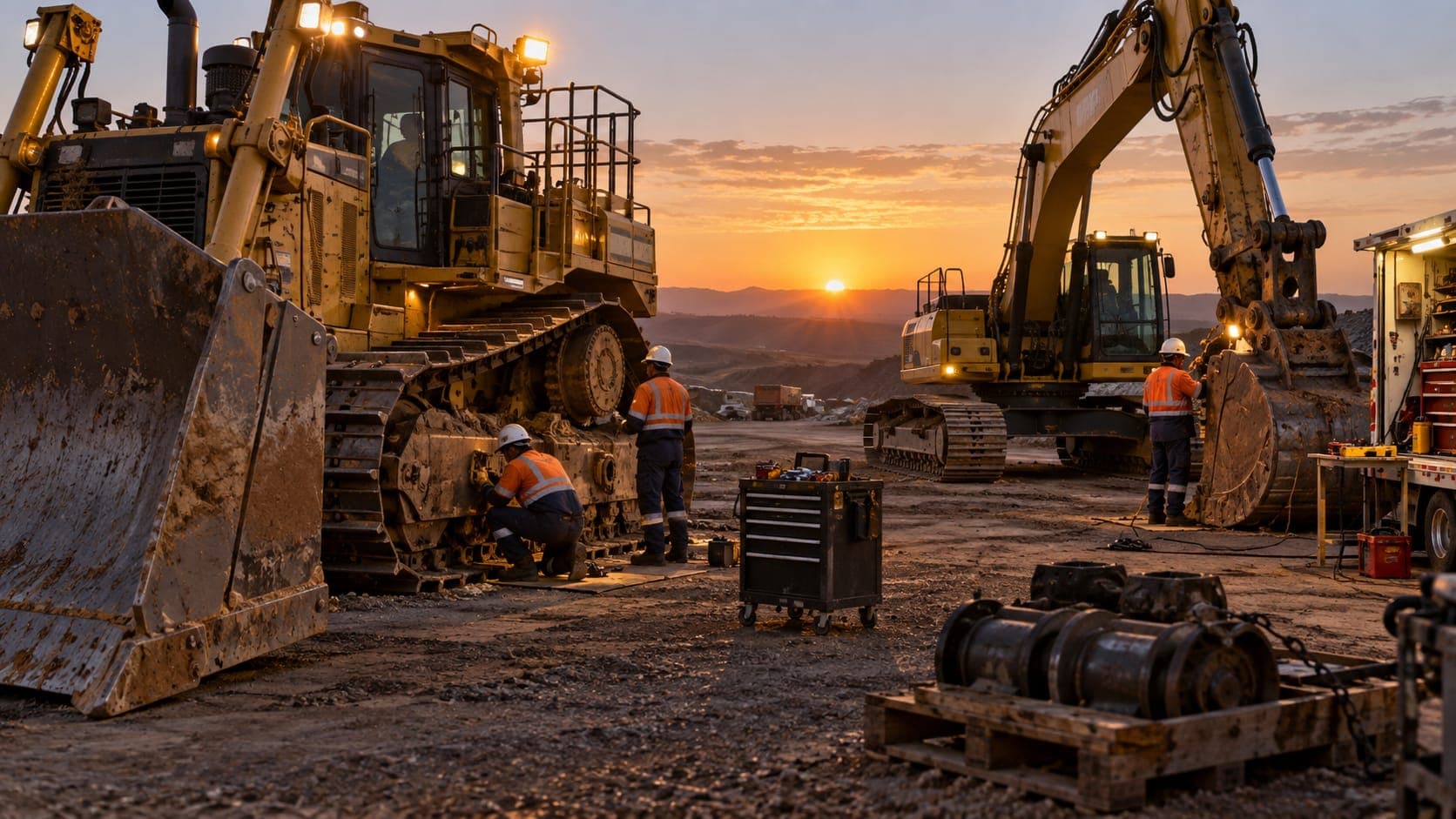
Hard, abrasive rock such as basalt, granite and quartzite wears bucket teeth, cutting edges, tyres and undercarriage quickly. Hire rates may include a wear allowance or charge ground-engaging tools separately. Clarify who pays for GET, tyres and undercarriage wear before comparing quotes.
- Rock protection or chains on loader tyres
- Heavy-duty or rock buckets
- Wear-part pricing and supply
- Undercarriage measurement at on- and off-hire
Stockpile and product handling
Wheel loaders on stockpiles and load-out need to keep product segregated, avoid contamination and load customer trucks quickly and accurately. On-board weighing on loaders can reduce overloading and weighbridge rework. Include product types, daily despatch tonnes and peak truck arrivals in the brief.
Compliance on quarry sites
Depending on the state, quarries may be regulated under mining or quarrying safety legislation rather than general work health and safety laws alone. Expect site-specific inductions, plant inspections and requirements similar to mine sites, including dust controls and supervision arrangements.
Australian quarry fleet benchmarks
Most Australian hard-rock quarries producing aggregates for concrete, asphalt and road base run 45–90 tonne excavators or 4–7 m³ wheel loaders at the face, loading 40–60 tonne rigid dump trucks or large ADTs. Smaller sand, gravel and road-base pits often run 30 tonne excavators and 30–40 tonne ADTs. Stockpile and sales loaders in the 3–5 m³ range load customers' trucks, commonly with on-board weighing to reduce overloading.
Mobile crushing and screening contractors are common in regional Australia, moving between quarries, road projects and mines on campaigns. When a mobile plant arrives, the face fleet may need to change to match its feed rate and location, so coordinate the loading fleet with the crushing contractor's schedule.
| Unit | Typical payload | Where it suits |
|---|---|---|
| 6-wheel tipper | About 10–12 t | Urban deliveries, small sites, road-legal haulage |
| 8-wheel tipper | About 15–18 t | Road-legal haulage with better payload |
| Truck and dog | About 30–34 t, depending on configuration and state mass limits | Road-legal bulk haulage between sites and quarries |
| Articulated dump truck (ADT) | 25, 30, 40 and 45 t classes | Soft or steep haul roads, wet conditions, off-road only |
| Rigid dump truck (quarry) | 40–100 t | Well-built haul roads, quarries, larger civil |
| Mining haul truck | 130–360 t and above | Open-cut mines on engineered haul roads |
Dust, silica and quarry compliance
Quarrying abrasive rock generates respirable crystalline silica. The Australian workplace exposure standard for respirable crystalline silica is 0.05 mg/m³ averaged over eight hours, and exposure is actively monitored by regulators. For hired plant this means sealed, pressurised cabs with effective filtration, water carts on haul roads, and suppression at crushers and conveyors. Ask suppliers about cab filtration and pressurisation, and include them in exposure monitoring where required.
Quarries are also subject to regular inspections for plant condition, edge protection on benches and ramps, and traffic management between customer trucks and production plant. Hired machines need to meet the same standards as owned plant.
Worked example: sizing a face fleet
Say a primary crusher is rated at 400 tonnes per hour and you expect it to run about 80% of scheduled time. The face fleet needs to deliver around 320 tonnes per hour on average, with capacity to recover after delays. If the haul from face to crusher is 600 metres with a ramp, and a truck cycle works out at around 8 minutes, each 40-tonne truck delivers about 300 tonnes per hour at best — so two trucks give some headroom, and a loading unit that can fill each in under four minutes keeps them moving.
Treat these as illustrative numbers only. Real cycle times depend on the ramp grade, road condition, dumping arrangement and operator skill, which is why suppliers should be asked to estimate production for your specific layout.
Questions to ask quarry plant suppliers
Use these questions to compare offers on the same basis:
- What hourly tonnes do you expect this loader or excavator to achieve in our rock and face height?
- Is the machine fitted with a rock bucket, tyre protection and on-board weighing?
- How are ground-engaging tools, tyres and undercarriage wear charged?
- What is your breakdown response time to our site, and do you hold spare machines?
- Do your operators hold the inductions and competencies our quarry requires?
Illustrative scenario: a regional road-base campaign
A council-owned gravel pit in inland NSW needs 40,000 tonnes of road base for a sealing program. A mobile crushing contractor will run a jaw and cone plant with a screen at around 250 tonnes per hour. The council hires a 30-tonne excavator to load the crusher feed, a loader for stockpiles and truck loading, a dozer to push up material and a water cart for dust.
The loader is fitted with scales so trucks leave at legal mass. The hire runs for the crushing campaign only, with float movements booked to match the crusher's arrival and departure.
Sample supplier brief
A short written brief gets faster, more comparable quotes. Adapt this example to your job:
“We need a wet-hire loading fleet to feed a mobile crushing plant at around 250 tph for a six-week road-base campaign at a council gravel pit near Parkes, NSW. The pit face is about 6 m high in weathered gravel with some oversize. Haul from face to crusher is under 300 m.”
“Please propose a loading unit, a stockpile and sales loader with scales, and a water cart, with rates, fuel arrangements, wear-part charges and mobilisation. Operators will need the pit's induction.”
Common questions
Should a quarry use a wheel loader or excavator at the face?
Wheel loaders are mobile and suit multiple faces and stockpile work; excavators often load more efficiently from a bench into trucks. Many quarries use both.
How are wear costs handled in quarry hire?
Some suppliers include normal wear in the rate; others charge for ground-engaging tools, tyres and undercarriage based on measured wear. Confirm the method before signing.
What is a typical crusher feed rate?
It varies widely, from under 100 tonnes per hour for small mobile plants to well over 1,000 tonnes per hour for large fixed circuits. Use your crusher's rated capacity and expected utilisation.
This guide is general information to help you prepare a better enquiry. It is not engineering, legal or safety advice. Equipment selection, engineering and safe systems of work remain the responsibility of competent project and supplier teams, and regulatory requirements differ between states and sites.