A machine that is waiting for fuel or a service is not producing. Planning how plant will be refuelled, greased and serviced — and who pays for what — protects availability and prevents disputes at the end of the hire.
Editorial planning guidance with illustrative scenarios. No independent professional review is claimed. Read the authorship and evidence policy or report a correction.
Estimate fuel burn
Fuel consumption varies with machine size, load and duty. Ask suppliers for typical consumption for the planned work, and use it to size fuel storage and delivery frequency. On large jobs, fuel can be one of the biggest operating costs.
Safe refuelling
Decide whether plant will be refuelled from a mobile fuel truck, a bunded site tank, or by a fuel supplier. Refuelling points need spill kits, bunding or drip trays, fire extinguishers and trained personnel. Near waterways or sensitive areas, stricter controls normally apply.
- Mobile fuel truck or site tank
- Spill kits and fire extinguishers
- Refuelling procedure and records
- Environmental exclusion areas
Service intervals and responsibilities
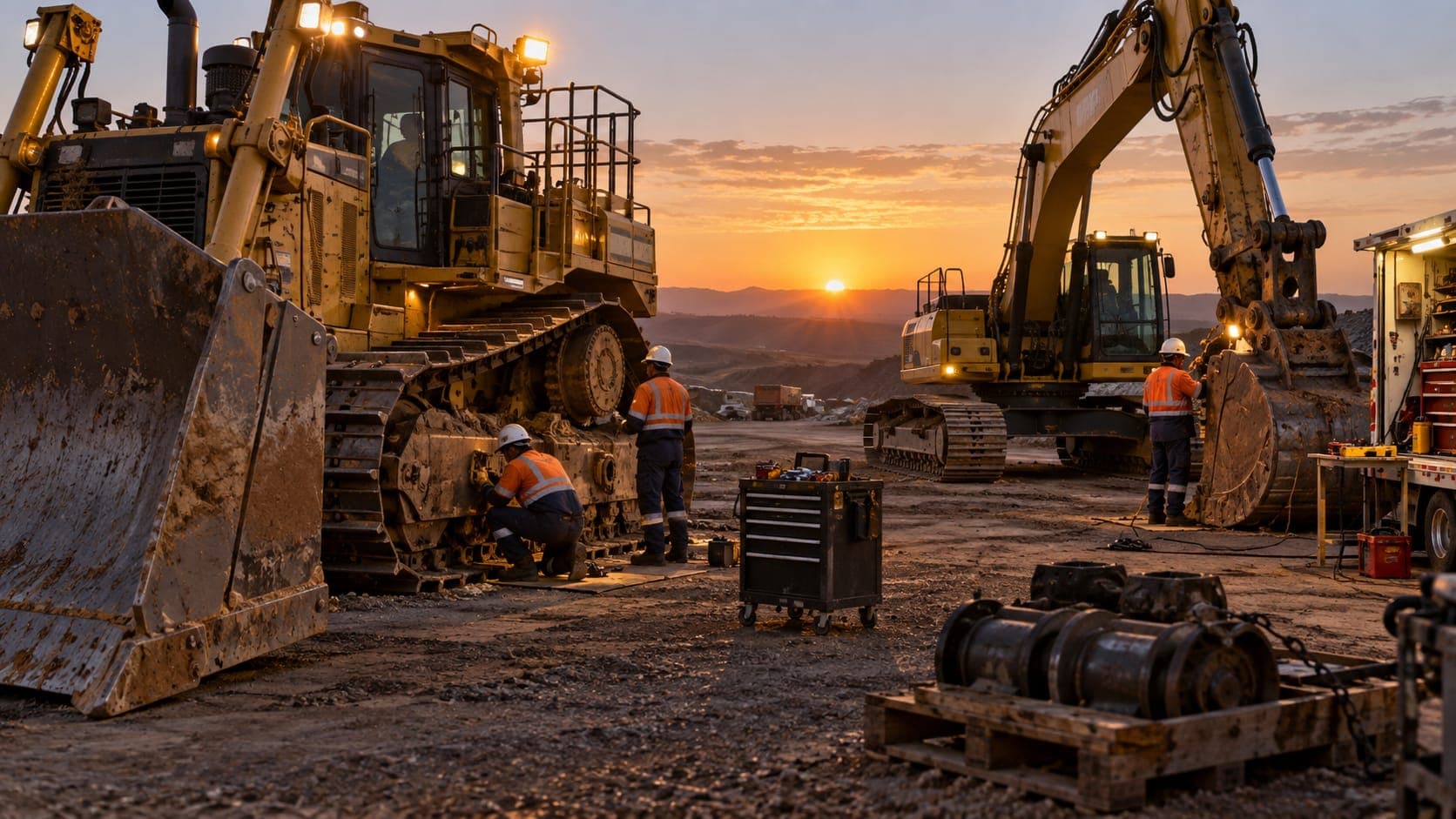
Machines need servicing at set hour intervals. Agree who performs services, where they will be done, and how downtime for servicing is treated in the hire. Daily checks and greasing are often the operator's job, even on dry hire.
Parts and breakdown support
Ask suppliers how quickly they can attend a breakdown, where their fitters are based, and what parts they stock. For critical plant, agree a response time and whether a replacement machine will be provided if a repair will take longer.
Keep records
Daily hour meter readings, fuel issued, pre-start checks and breakdown logs are essential for invoicing and for resolving disputes. Keep them consistent for every machine.
Typical fuel burn for common plant
Fuel consumption depends on load factor, but rough figures help size storage and budgets. A 20–25 tonne excavator on general digging commonly uses around 12–18 litres per hour; a 30–36 tonne excavator 18–28 litres; a D6-class dozer 18–28 litres; a 12–14 class grader 12–20 litres; a 30–40 tonne ADT 18–30 litres; and a 10–12 tonne roller 8–14 litres. Heavy ripping, steep hauls and continuous high-load work sit at the top of the range.
For a fleet of ten machines averaging 20 litres per hour over a 10-hour shift, daily fuel use is around 2,000 litres. That determines tank size, delivery frequency and whether a dedicated fuel truck is justified.
Fuel storage, spills and tax credits
Diesel storage on site should be in bunded or self-bunded tanks, positioned away from drains and waterways, with spill kits and fire extinguishers. Environmental approvals or council conditions may set specific requirements. Refuelling procedures should include controls for overfilling and a clear response if a spill occurs.
Businesses using diesel in off-road plant may be eligible for fuel tax credits, administered by the Australian Taxation Office. Whether the hirer or supplier can claim depends on who buys the fuel and how it is used. It is worth discussing with your accountant, because it can change the comparison between fuel-inclusive and fuel-exclusive quotes.
Service intervals in practice
Most earthmoving plant has service intervals of around 250 or 500 hours, with larger services at 1,000 and 2,000 hours. On double shifts, 250 hours can arrive in less than two weeks. Agree who monitors hours, where services will be done, and how long each will take. Oil sampling programs help detect wear early on long hires, especially in dusty conditions.
- Record hour meter readings daily
- Schedule services in planned downtime where possible
- Keep a small stock of filters and fluids on remote sites
- Agree whether oil sampling is included
Common mistakes
Running out of fuel is surprisingly common on busy sites, especially at night or weekends. Another frequent issue is refuelling in unsuitable locations without spill controls. Missed services, especially when hours accumulate quickly on double shifts, can lead to breakdowns and disputes over damage.
Agree who tracks hours and schedules services, and make sure daily hour meter readings are recorded for every machine.
Questions to ask suppliers
Before the machine arrives, confirm:
- Is fuel included, and if not, how will the machine be refuelled?
- What are the service intervals and who performs them?
- What is your breakdown response time, and where are your fitters?
- Will you provide a replacement machine if a repair takes longer than a set time?
Greasing and daily checks
Daily greasing of pins and bushes is one of the cheapest ways to reduce wear, especially on excavators and loaders in wet or dusty conditions. Make it part of the pre-start routine with fluid level checks.
Illustrative scenario: a subdivision earthworks fleet
A contractor running eight machines on a subdivision in Western Sydney uses about 1,600 litres of diesel per day. A fuel supplier delivers to a self-bunded 10,000-litre tank twice a week, and the contractor's own fuel truck refuels machines at lunch and at the end of the shift.
Every machine's hours and fuel are recorded on a daily sheet. When a machine approaches a 250-hour service, the supplier's fitter schedules it for a Saturday morning so production is not lost. A spill kit is kept at the tank and on the fuel truck.
Sample supplier brief
A short written brief gets faster, more comparable quotes. Adapt this example to your job:
“We are hiring eight machines for a six-month subdivision project in Western Sydney. Please confirm whether fuel is included in your rates; if not, we will refuel from our own self-bunded tank.”
“Also confirm service intervals, who performs services and where, breakdown response time, and whether a replacement machine will be provided if a repair exceeds 24 hours. We will record daily hours and fuel for each machine.”
Common questions
Is fuel included in plant hire?
Sometimes. Wet hire may include fuel, dry hire usually does not. Always confirm in writing.
Who pays for downtime during servicing?
Usually scheduled servicing is not charged as working time. Confirm how service time and breakdowns are treated in the hire terms.
Can I claim fuel tax credits on hired plant?
Possibly. Fuel tax credits are generally claimed by the business that buys and uses the fuel in eligible activities. If fuel is supplied by the hire company, the hire company may claim. Check with your tax adviser and the ATO guidance.
How often should hired plant be serviced?
Follow the manufacturer's intervals, commonly every 250 or 500 hours, and more often in dusty or severe conditions. Confirm who performs and pays for services in the hire agreement.
This guide is general information to help you prepare a better enquiry. It is not engineering, legal or safety advice. Equipment selection, engineering and safe systems of work remain the responsibility of competent project and supplier teams, and regulatory requirements differ between states and sites.