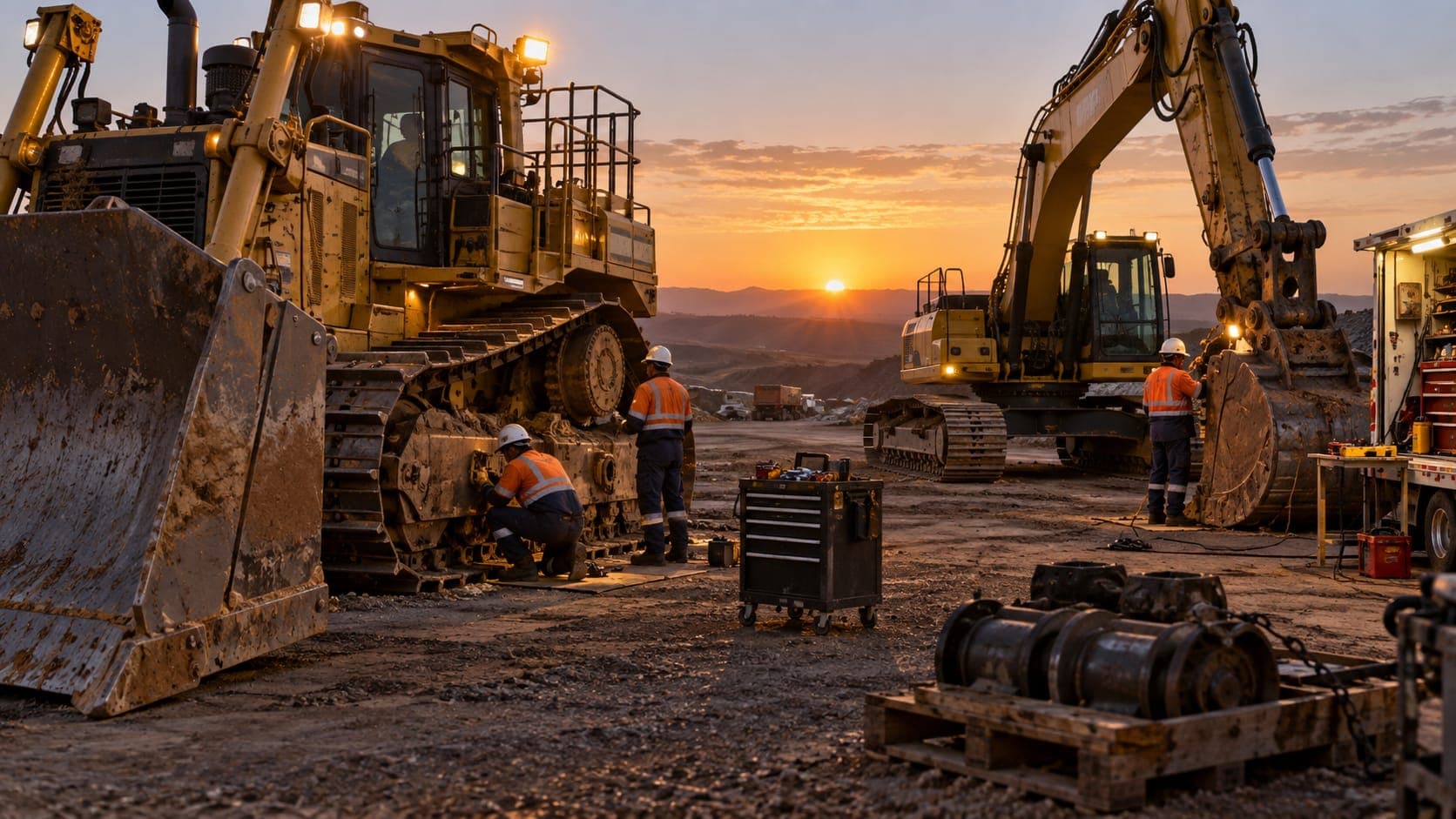
A supplier's published service area does not tell you where a particular machine will dispatch from. Regional shortlisting should connect the proposed unit to transport, field support and the project window. A nearby office and a nearby available machine are different pieces of information.
Editorial planning guidance with illustrative scenarios. No independent professional review is claimed. Read the authorship and evidence policy or report a correction.
Ask where the proposed unit is located
Request the actual dispatch depot for the quoted machine and attachment. Confirm whether the unit is reserved, proposed or subject to availability. Keep those answers beside the price rather than treating every listed branch as available stock.
Give the supplier the full destination and receiving constraints. Ask what happens if the dispatch location changes before delivery. A substitution from another depot may change freight, timing and support assumptions.
Compare mobilisation in both directions
Ask for transport to site and return transport to be stated separately, including the assumptions behind each movement. Describe the route constraints known to the project team and ask the transport provider what else needs assessment.
Compare those costs across the actual planned duration. Freight may dominate a short hire but have a different significance over several months. Avoid deciding by depot distance alone without understanding the complete offer.
Example: local generalist and regional specialist
One nearby supplier offers a broad equipment range; a more distant specialist proposes a better-matched configuration. Compare the named equipment, attachments, delivery window and support arrangements against the same task before choosing.
The local option is not automatically faster to mobilise, and the specialist is not automatically better supported. Obtain specific answers for the project dates. Record unresolved availability and service assumptions in the shortlist.
Make support concrete
Ask who receives a fault report, where field support would travel from and which steps follow an interruption. Discuss how parts, servicing and potential substitutes would be arranged. Record the offer without converting a possibility into a guaranteed response.
Use the regional page to understand the local work context, then confirm site-specific facts directly. If the job crosses state boundaries or changes location, revisit transport and support arrangements with the supplier before assuming the original quote still applies.
Shortlist on a dispatch plan, not map proximity
Illustrative situation: one business has a nearby office but the required unit is held interstate. Another has a more distant head office and a unit at a closer operational depot. The business address alone can reverse the apparent transport advantage.
Send the same brief to each shortlisted business and ask where the specific package would originate. Record whether the proposed unit is available, reserved or still subject to confirmation. Compare support and substitution arrangements as well as freight. If the dispatch location changes before acceptance, refresh the complete comparison. Directory records and supplier websites can help you identify candidates, but neither provides a live allocation of equipment for your project. Keep the supplier’s written response as the decision evidence.
| Check | Information needed | Next action |
|---|---|---|
| Coverage | Published service region | Useful for discovery, not proof of a depot |
| Dispatch | Named unit and its location for the dates | Price actual outward and return movements |
| Support | Contact, travel and response arrangements | Agree what happens during an interruption |
Common questions
Does a service-area listing prove a local depot?
No. A service area can describe coverage without a physical branch. Ask where the proposed machine and support team will come from.
Should I always choose the closest supplier?
Compare the complete equipment and support package for your dates. Distance is one factor alongside suitability, availability and total mobilisation cost.
This guide is general information to help you prepare a better enquiry. It is not engineering, legal or safety advice. Equipment selection, engineering and safe systems of work remain the responsibility of competent project and supplier teams, and regulatory requirements differ between states and sites.