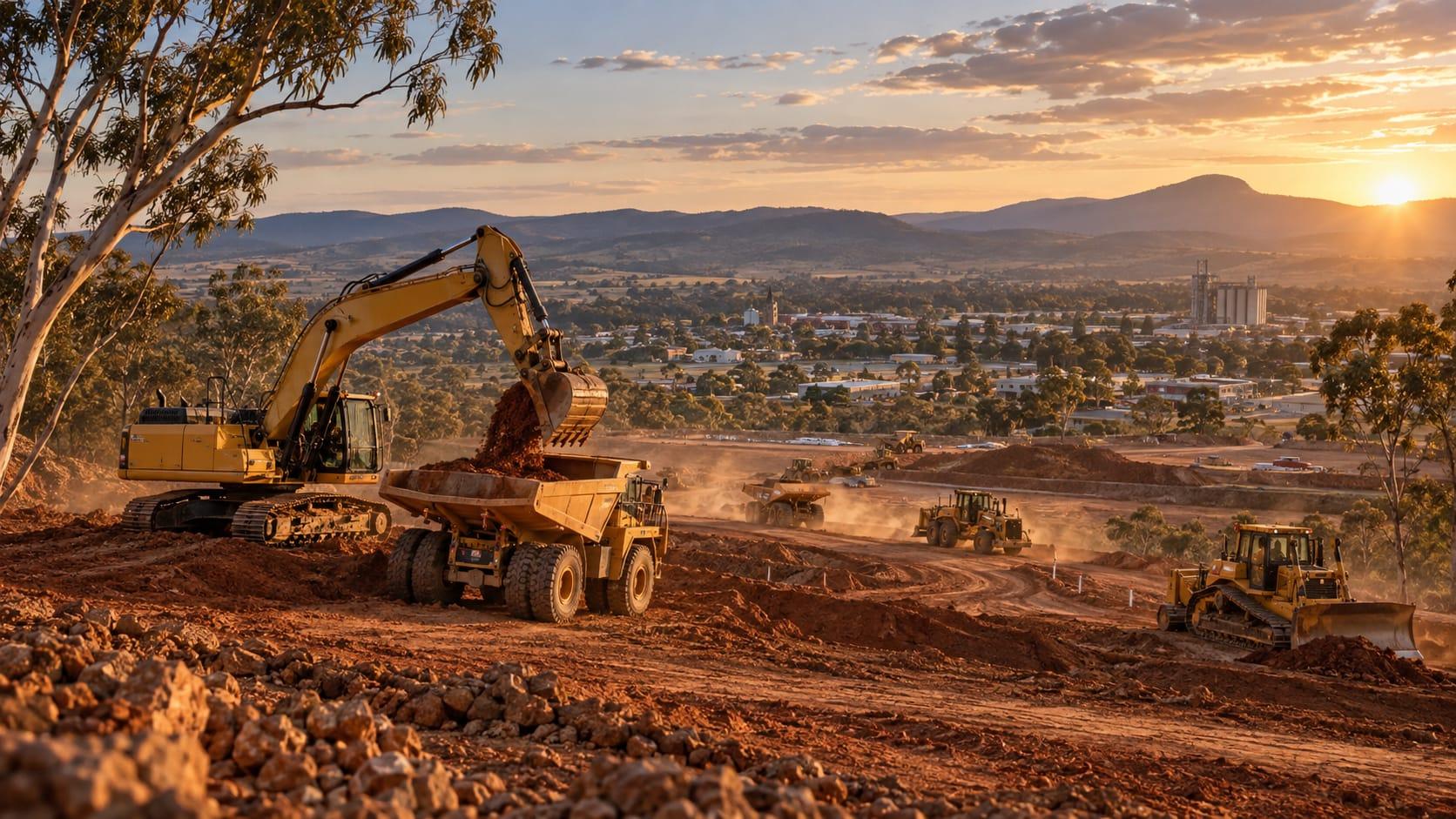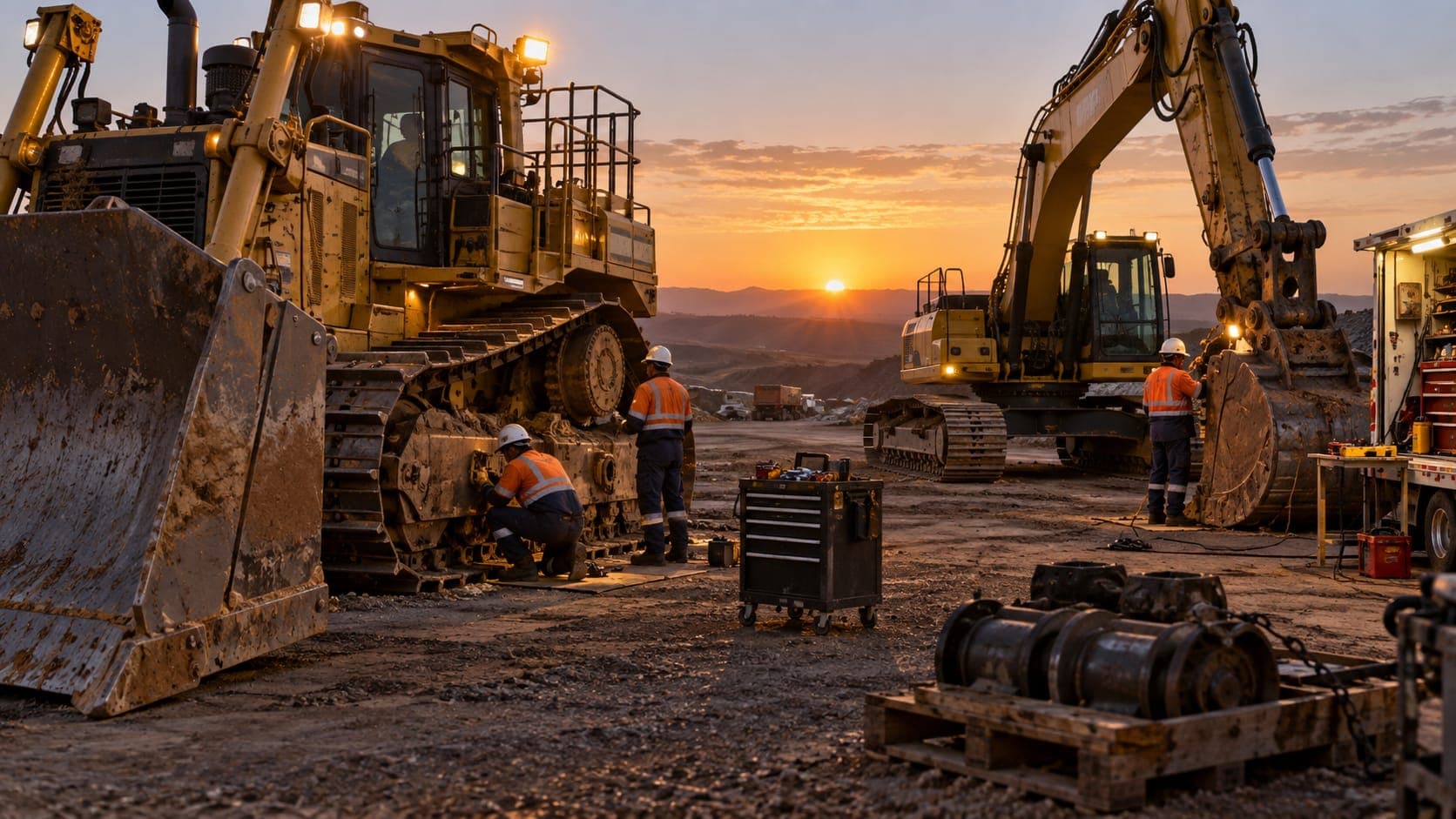
Dust is common on inland, mining and quarry sites. It enters engines, hydraulics and cabs, wears components, reduces visibility and can harm health. Planning for dust protects plant, operators and neighbours.
Editorial planning guidance with illustrative scenarios. No independent professional review is claimed. Read the authorship and evidence policy or report a correction.
Filtration and servicing
Dusty conditions clog air filters and contaminate fluids. Ask suppliers about pre-cleaners and heavy-duty filtration, and increase service frequency. Check filters daily.
Cab sealing and air quality
Operators need sealed, pressurised cabs with good filtration. Some dusts, such as those containing crystalline silica, are hazardous. Follow site monitoring and exposure controls.
Visibility and dust suppression
Dust reduces visibility and increases collision risk. Water carts, dust suppressants, speed limits and good haul road design help. Keep lights and cameras clean.
- Water carts on haul roads
- Speed limits and signage
- Clean lights and cameras
- Dust monitoring
Wear
Abrasive dust wears pins, bushes, seals and undercarriage faster. Grease more often and inspect wear points. Discuss wear charges with suppliers.
Silica and diesel exposure standards
Respirable crystalline silica (RCS) is generated when cutting, crushing, drilling or moving materials such as sandstone, granite, quartzite and concrete. The Australian workplace exposure standard for RCS is 0.05 mg/m³ averaged over an eight-hour shift, and regulators actively enforce it. Diesel exhaust emissions are also a recognised hazard, especially in enclosed or poorly ventilated areas.
Controls for plant operators include sealed and pressurised cabs with effective filtration, keeping doors and windows closed, water suppression on haul roads and at dig faces, and air monitoring. For workers outside cabs, respiratory protection may be required.
Where dust is a major issue in Australia
Dust is a persistent issue in the arid and semi-arid interior, on mine sites in the Pilbara, Goldfields and Bowen Basin, in quarries across the country, and on large earthworks during dry summers. Red dirt in the Pilbara and fine clays in inland NSW and Queensland are particularly hard on filters and seals.
Near towns and homes, dust can also be an environmental compliance issue, with state environmental regulators and councils setting conditions. Water carts, dust suppressants, speed limits and stopping work in high winds may all be required.
- Budget water cart capacity based on haul road length and weather
- Monitor wind forecasts and set stop-work thresholds
- Check cab filters and seals at every service
- Use sealed cabs with positive pressurisation
Maintenance adjustments
Machines working in dust need more frequent air filter checks and changes, pre-cleaners, more frequent greasing to flush contaminants from pins and bushes, and regular radiator and cooler cleaning. Oil sampling helps detect dust ingress early. Undercarriage and ground-engaging tools also wear faster, so inspect them more often and agree wear charges with the supplier.
What it means for the hire agreement
Dust increases servicing frequency and component wear, and some suppliers price that in through a higher rate or wear charges. Agree service intervals for the conditions, who pays for extra filters, and how abnormal wear is assessed at the end of the hire.
If water carts are needed for dust suppression, include them in the plant package and confirm water sources and fill points early.
Common mistakes
Skipping daily filter checks, running without pre-cleaners and letting cabs lose their seal all lead to higher wear and poor air quality. Another common issue is not having enough water carts to control dust on haul roads.
Plan dust controls and servicing from the start and review them as conditions change.
Questions to ask suppliers
For dusty sites, ask:
- What filtration and pre-cleaners are fitted?
- How often will machines be serviced in these conditions?
- Are cabs sealed and pressurised?
- How is extra wear charged?
Community and environmental dust controls
Dust leaving a site can trigger complaints and regulatory action. Environmental approvals often require dust management plans, monitoring and stop-work triggers based on wind speed or visible dust. Controls include watering haul roads and stockpiles, limiting vehicle speed, covering loads leaving site, stabilising exposed surfaces, and stopping dusty activities in high winds.
Monitoring may use visual inspections, dust deposition gauges or real-time particulate monitors near sensitive receivers such as homes and schools. Keep records of watering, monitoring and any stop-work decisions, as they help show compliance if a complaint is made.
Water supply is often the limiting factor. Identify water sources early — town water standpipes, bores, dams or recycled water — and confirm any licences or approvals needed to take water. On large sites, a dedicated water fill point close to the work reduces water cart cycle times and keeps haul roads damp.
Dust suppressants such as polymer or salt-based products can reduce water use on long-term haul roads. Check that products are approved for the site and will not harm nearby waterways or vegetation.
Illustrative scenario: a quarry expansion
A hard-rock quarry in Victoria is expanding its pit. The contractor's excavators, dozers and ADTs work in fine, abrasive basalt dust.
Machines are fitted with pre-cleaners and cabs are checked for pressurisation. Air filters are inspected daily and replaced more often than the standard interval. Two water carts run continuously on haul roads, and work stops when winds exceed the quarry's threshold. Oil samples are taken at every service. The supplier's undercarriage measurements at on-hire and off-hire are used to agree wear charges.
Sample supplier brief
A short written brief gets faster, more comparable quotes. Adapt this example to your job:
“We need excavators, a dozer and ADTs for a quarry expansion in basalt near Geelong, VIC, where dust is persistent. Please confirm air filtration and pre-cleaners fitted, cab pressurisation, and recommended service intervals for these conditions.”
“Also state how undercarriage and ground-engaging tool wear will be measured and charged, whether oil sampling is included, and whether you can supply a second water cart for haul road dust suppression.”
Common questions
How often should air filters be checked in dusty conditions?
Daily inspection is common, with servicing as needed. Follow the manufacturer's guidance for severe conditions.
Is dust from construction sites hazardous?
It can be. Dust containing crystalline silica is a known health hazard, and controls and monitoring may be required.
What is a pre-cleaner?
A device fitted to an engine air intake that removes larger dust particles before air reaches the main filter, extending filter life.
What is cab pressurisation?
Keeping the air pressure inside a sealed cab slightly higher than outside, so dust is pushed out rather than drawn in.
How much water does dust suppression need?
It depends on haul road length, traffic, temperature and wind. Large sites can use many thousands of litres per day; plan water supply early.
This guide is general information to help you prepare a better enquiry. It is not engineering, legal or safety advice. Equipment selection, engineering and safe systems of work remain the responsibility of competent project and supplier teams, and regulatory requirements differ between states and sites.