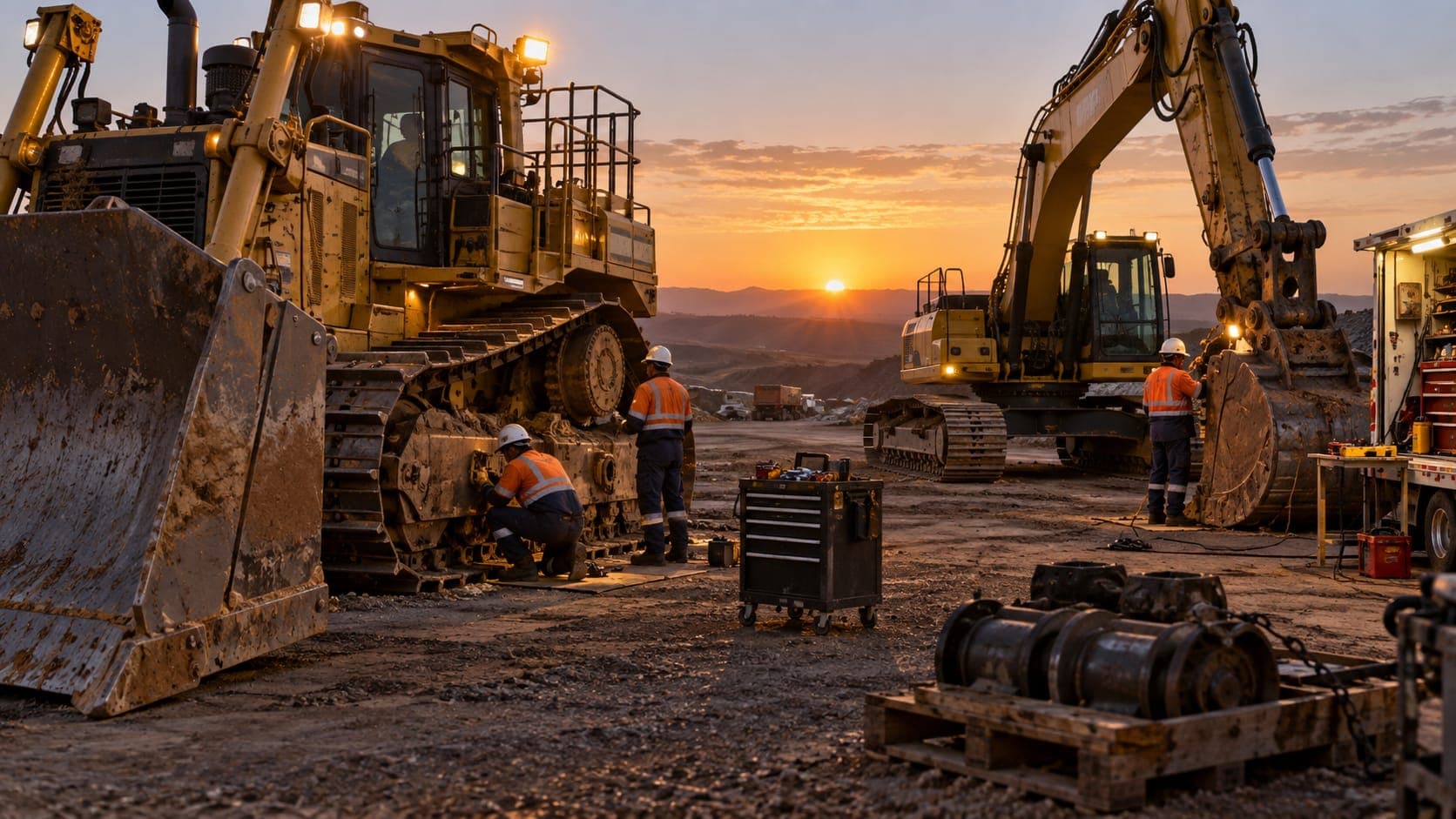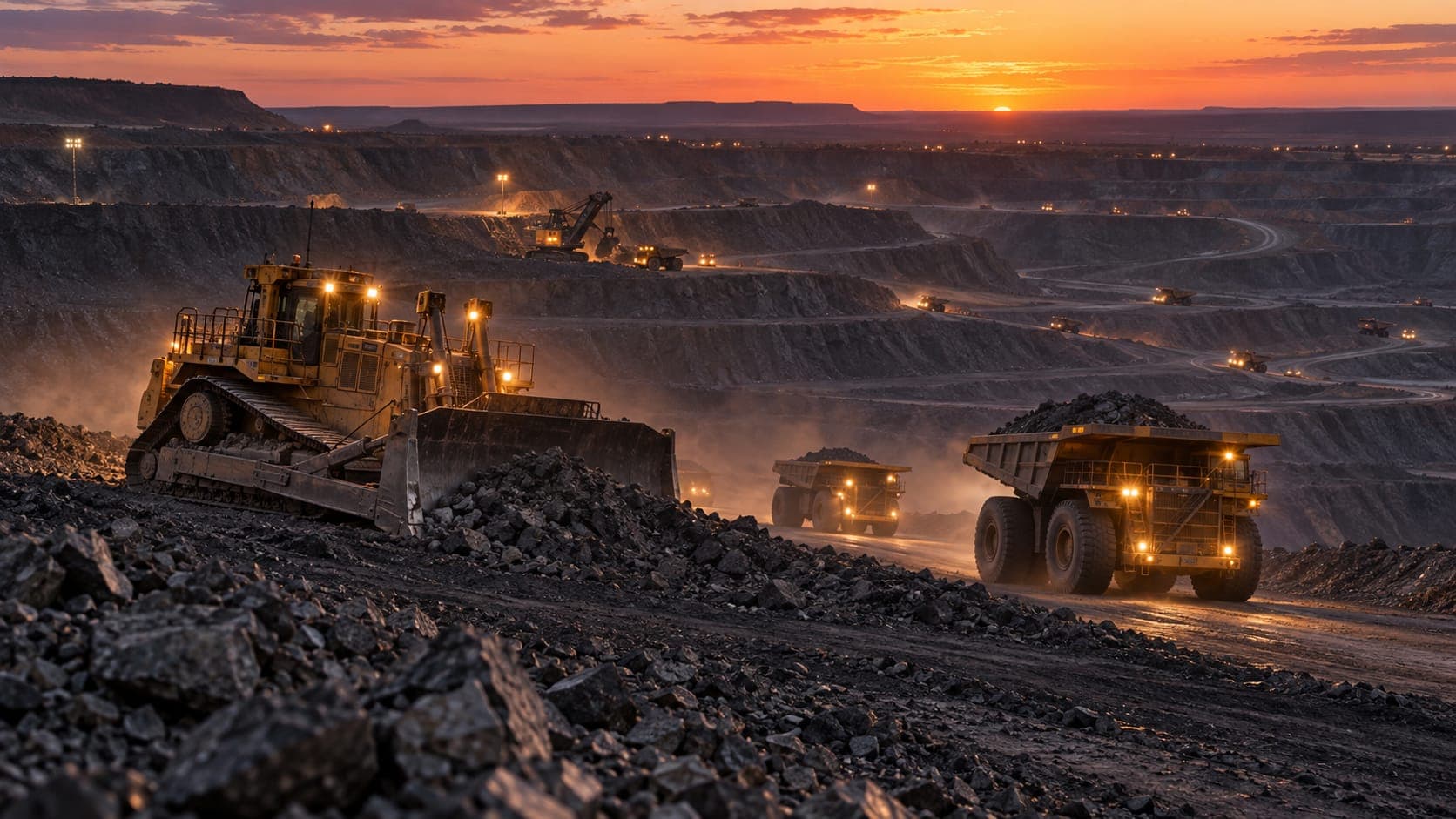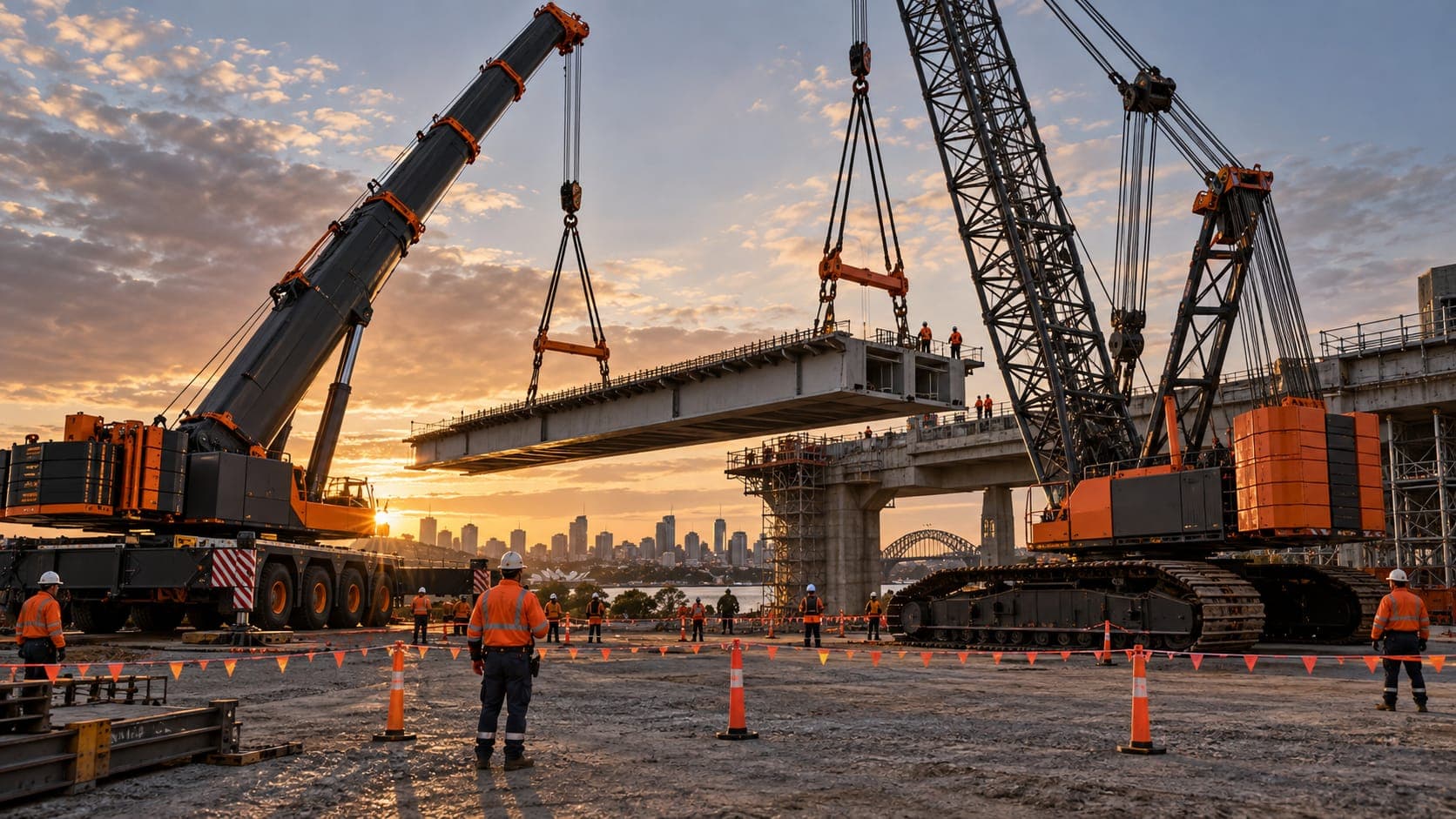
Ports, refineries, smelters and processing plants keep operating while construction and maintenance happen around them. Plant hire here is shaped by permits, interfaces with live operations, confined laydown space and demanding compliance systems more than by production rates.
Editorial planning guidance with illustrative scenarios. No independent professional review is claimed. Read the authorship and evidence policy or report a correction.
Working inside an operating site
Operating sites control work through permit-to-work systems, isolations and area authorities. Every machine movement may require a permit, a spotter and coordination with operations. Tell suppliers the site's permit process and typical delays so they can plan realistic hours and standby.
Lifting in congested plant
Industrial lifts often happen between pipe racks, structures and live equipment. Compact cranes, crawler cranes, franna-style pick-and-carry cranes and specialist lifting gear are common. Provide 3D models or detailed drawings where available, because slew and boom clearances decide the crane size more often than load weight.
Laydown, access and traffic
Laydown is usually scarce. Plan where plant parks, refuels and is maintained, and how it travels between work areas without disrupting port or plant traffic. Wharf and hardstand load limits must be checked for heavy cranes and outrigger loads.
- Designated plant travel routes
- Wharf and slab load limits
- Refuelling and spill control points
- After-hours access and security
Hazardous areas and corrosion
Some industrial areas are classified as hazardous zones because of flammable gases or dusts. Standard plant may not be permitted without controls such as spark arrestors, gas monitoring or hot-work permits. Marine and chemical environments also accelerate corrosion; ask about maintenance and wash-down expectations.
Shutdowns and turnarounds
Planned shutdowns compress large volumes of work into days. Crane, access and materials-handling plant must be booked well ahead, often with standby at a daily rate. Agree mobilisation dates, standby terms and what happens if the shutdown moves.
Australian port and industrial environments
Australia's major ports, LNG plants, refineries, alumina refineries and smelters operate under strict safety management systems and, in many cases, major hazard facility regulations. Contractors and hired plant must comply with the facility's permit-to-work, isolation and hazardous-area requirements. Security also matters: ports require maritime security identification for many workers, and site access can take time to arrange.
Industrial shutdowns in Australia are often planned around seasonal demand and maintenance cycles, and many large shutdowns across the resources sector compete for the same cranes, access equipment and skilled crews. Book early, and have contingency options if the preferred supplier is committed elsewhere.
Plant commonly hired for industrial work
Industrial maintenance and construction typically draws on pick-and-carry cranes of 20–40 tonnes, all-terrain cranes of 50–250 tonnes for heavier lifts, crawler cranes for long-duration or very heavy work, boom and scissor lifts, telehandlers, forklifts and specialised transport such as self-propelled modular transporters for large modules. Earthmoving plant is usually smaller and more tightly controlled than on greenfield sites.
Many facilities require plant to be inspected and tagged on arrival, with daily pre-start checks recorded. Some also require spark arrestors, intrinsically safe equipment or gas detection in classified areas. Ask the facility for its plant entry requirements early and share them with suppliers.
| Crane | Project quote |
|---|---|
| Pick-and-carry (Franna-type) 20–25 t | Request a project-specific written quote |
| Pick-and-carry 40 t | Request a project-specific written quote |
| City or all-terrain 50–60 t | Request a project-specific written quote |
| All-terrain 100 t | Request a project-specific written quote |
| All-terrain 200–250 t | Request a project-specific written quote |
| Dogman or rigger (additional) | Request a project-specific written quote |
Common mistakes on operating sites
Plans that assume open access usually fail inside a live plant. Permits take longer than expected, isolations delay starts, and plant sits idle waiting for an area authority. Build realistic permit and access time into both the programme and the hire rates.
Slab and wharf capacity is another trap. A crane's outrigger loads may exceed what a slab, pit cover or wharf deck can carry. Get structural advice early rather than discovering the limit on lift day.
Questions to ask suppliers for industrial work
When comparing lifting and plant suppliers for an operating site, ask:
- Have your operators worked under our site's permit-to-work system before?
- Can you provide compact or pick-and-carry cranes suited to congested areas?
- What documentation do you provide for plant inspection and hazardous-area compliance?
- How do you charge for time lost to permits, isolations or area access?
- Can you commit crews and cranes for our shutdown dates, and what if the dates move?
Documentation industrial sites expect
Industrial and port operators typically ask for more paperwork than civil sites before plant can start. Expect to provide current registration or plant inspection records, crane logbooks and major inspection status, lifting gear certificates and tags, a plant risk assessment, operator licences and VOCs, insurance certificates, and safe work method statements for high-risk construction work. Some sites also ask for noise and emissions data.
Prepare a document pack for each machine and send it with the booking confirmation. Missing paperwork is one of the most common reasons plant is turned away at the gate on shutdown day.
Illustrative scenario: a refinery shutdown
An alumina refinery plans a three-week shutdown to replace heat exchangers and repair structures. The work needs a 250-tonne all-terrain crane for the heaviest lifts, two pick-and-carry cranes for general work, a dozen boom lifts, telehandlers and forklifts.
Because the refinery's permit system can delay starts, the crane company prices a daily rate with standby rather than a strict hourly rate. All cranes are inspected on arrival, and operators complete refinery inductions a week before the shutdown. Lifting plans are prepared ahead of time, and the shutdown coordinator sequences lifts to keep cranes busy.
Sample supplier brief
A short written brief gets faster, more comparable quotes. Adapt this example to your job:
“We require cranes and access equipment for a three-week refinery shutdown in Gladstone, QLD, starting on a fixed date in August. Heaviest lift is a 38-tonne exchanger bundle at 22 m radius; drawings attached. We also need two 20-tonne pick-and-carry cranes, twelve boom lifts of 16–26 m, and two telehandlers.”
“Operators must complete the refinery induction and work under our permit-to-work system, which can delay starts. Please quote daily rates with standby, inspection documentation, crew licences and what happens if the shutdown dates move.”
Common questions
What crane is best for industrial maintenance work?
Pick-and-carry cranes, compact mobile cranes and small crawlers are common in congested plants. The right choice depends on access, load, radius and ground or slab capacity.
How far ahead should shutdown plant be booked?
As early as possible. Large cranes and access equipment are in high demand during shutdown seasons, so bookings are often made months ahead.
What is a permit to work?
A formal system used on industrial sites to authorise specific work in a specific area, confirming hazards are controlled, isolations are in place and the area is safe before work starts.
Can standard plant work in hazardous areas?
Not always. Classified hazardous areas may need equipment with specific protections or controls such as gas monitoring and hot-work permits. The site will specify requirements.
This guide is general information to help you prepare a better enquiry. It is not engineering, legal or safety advice. Equipment selection, engineering and safe systems of work remain the responsibility of competent project and supplier teams, and regulatory requirements differ between states and sites.