Wind and solar farms are among the largest civil packages in regional Australia. They combine long internal road networks, heavy crane hardstands, many kilometres of cable trenches and remote logistics. The plant plan has to cope with spread-out workfronts and very heavy component deliveries.
Editorial planning guidance with illustrative scenarios. No independent professional review is claimed. Read the authorship and evidence policy or report a correction.
Access roads built for heavy haul
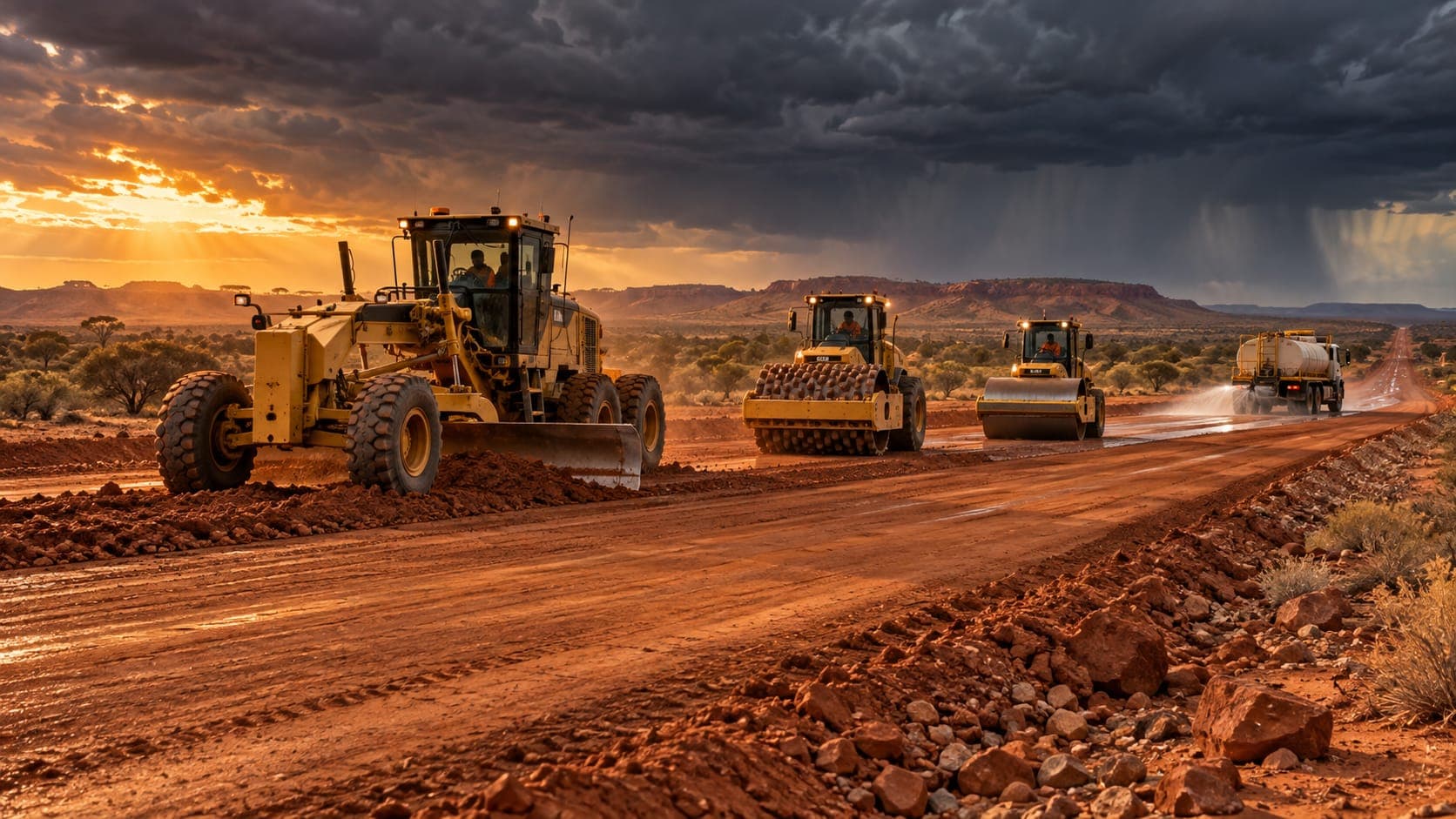
Wind turbine blades, tower sections and nacelles arrive on long, heavy specialised trailers. Internal roads must meet the turbine supplier's requirements for width, bend radius, gradient and bearing capacity. That drives a road construction fleet of dozers, graders, rollers, water carts and trucks, often working in several places at once.
Crane hardstands and assembly areas
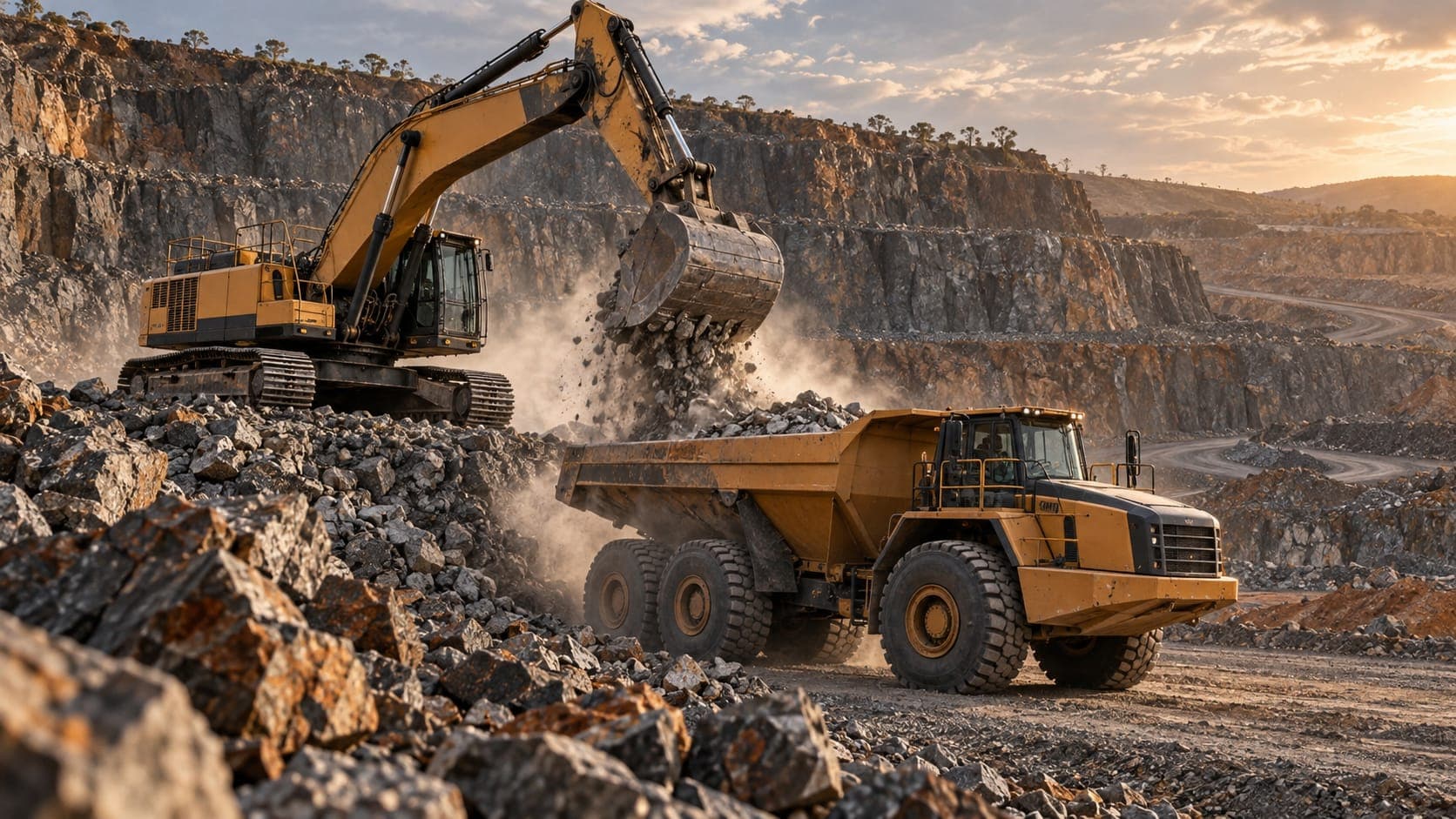
Main erection cranes for wind turbines are very large crawler or mobile cranes that need engineered hardstands and space to assemble their booms. Hardstands are designed for high bearing pressures, and their construction is a significant earthworks and compaction task. Plan when each hardstand must be ready relative to the crane's movement between turbines.
Cable trenching and reticulation
Solar farms and wind farm collector systems involve long runs of cable trenching. Trenchers, excavators with narrow buckets, and plant for sand bedding and backfill are typical. Ground conditions — rock, clay or sand — decide whether chain trenchers, rock saws or excavators are best. Ask suppliers for production rates per metre in your ground type.
- Trenching method matched to ground type
- Bedding sand supply and placement
- Compaction of backfill
- Drum handling and cable pulling equipment
Piling and module installation on solar farms
Solar tracker and fixed-tilt structures are typically installed on driven or screwed piles. Pile-driving rigs, telehandlers for module distribution, and all-terrain vehicles for crews are common hires. Pile refusal in rocky ground may require pre-drilling, which changes the fleet.
Remote logistics and weather
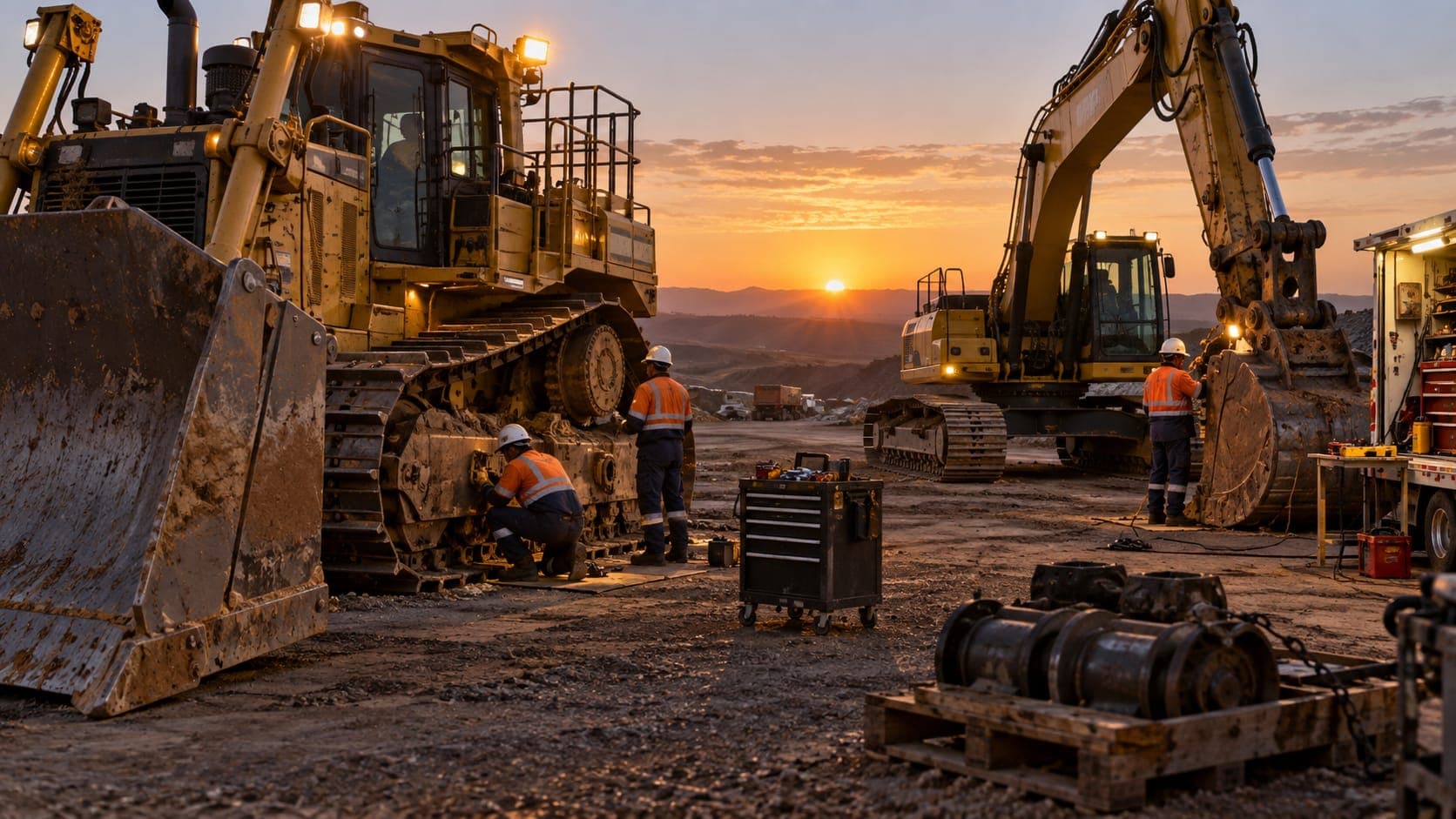
Many renewable projects are hours from major towns. Fuel, servicing, accommodation and parts are material parts of the plan. Wind, heat and wet-season access affect both crane operations and earthworks. Build weather contingency and clear standby terms into the hire agreements.
Scale of the Australian renewable pipeline
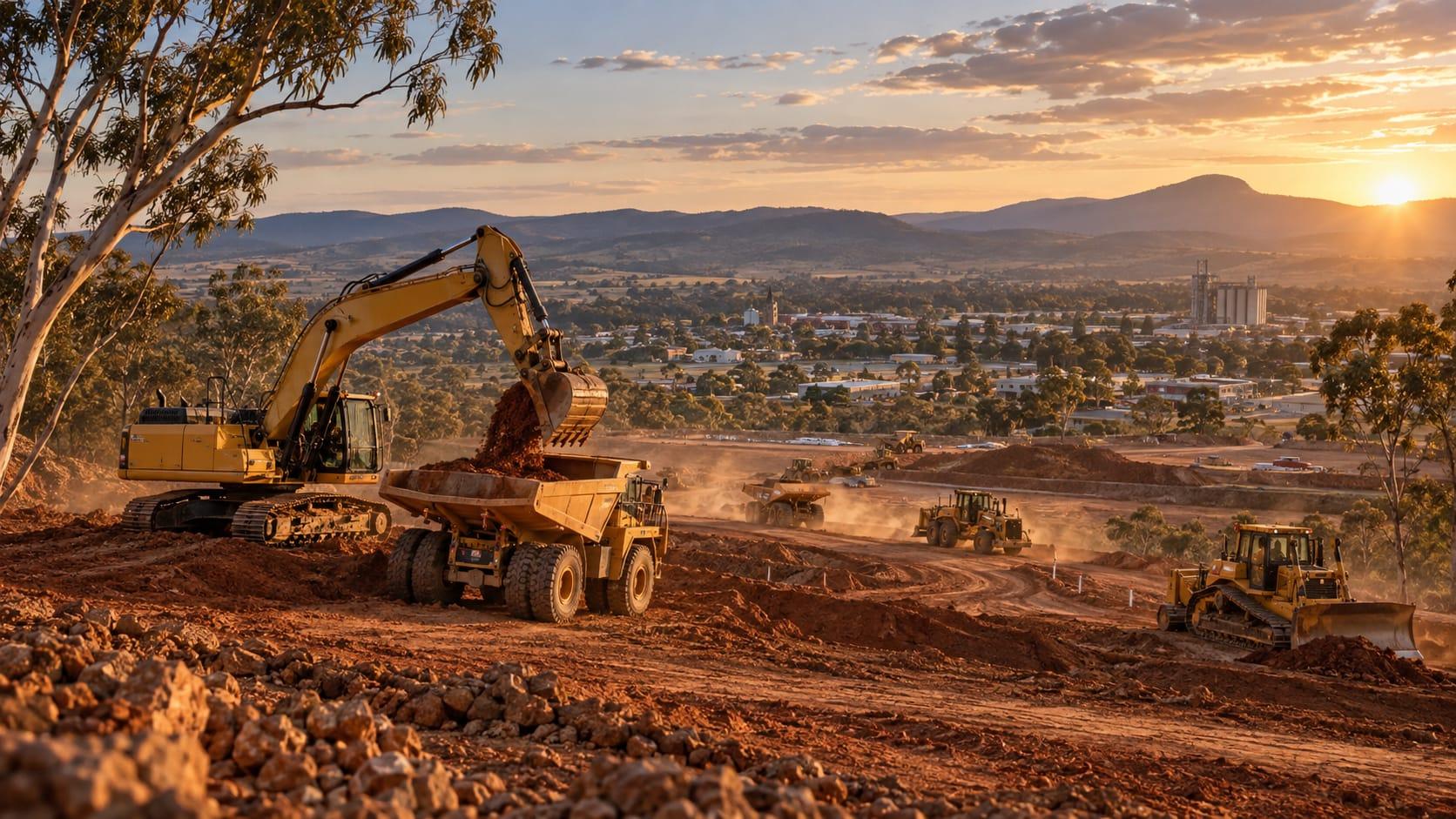
Australia's renewable energy zones in New South Wales, Queensland, Victoria and elsewhere are driving some of the largest civil packages in regional areas. A typical onshore wind farm involves tens of kilometres of internal roads, one hardstand and foundation per turbine, substations and collector cabling. Solar farms involve large areas of light earthworks, thousands of piles and long cable trenches. Both can require hundreds of heavy vehicle movements for components, aggregates and concrete.
Because these projects often run in parallel in the same regions, plant and operators can be scarce. Early engagement with suppliers, sometimes months before mobilisation, helps secure fleet and accommodation.
Component delivery and crane classes
Modern turbine blades can exceed 70 metres in length and nacelles often weigh well over 80 tonnes, so delivery requires specialised trailers, oversize and overmass permits, route surveys and sometimes temporary road modifications. In most states permits are issued through the National Heavy Vehicle Regulator; in Western Australia through Main Roads WA and in the Northern Territory through the NT Government.
Main erection cranes for large turbines are typically crawler cranes of several hundred to over 1,000 tonnes capacity, supported by assist cranes of 100–250 tonnes. Moving a main crane between turbine locations can involve partial disassembly, which is why hardstands and crane paths must be complete and within specification before the crane arrives.
| Movement | Project quote |
|---|---|
| Tilt tray or tag trailer (mini to 8 t) | Request a project-specific written quote |
| Semi low-loader float (to about 30 t) | Request a project-specific written quote |
| Oversize float with permits | Request a project-specific written quote |
| Pilot or escort vehicle | Request a project-specific written quote |
Sequencing the civil package
Renewable projects usually move in a wave: access roads open up the site, hardstands and foundations follow, then cable trenching and electrical works, and finally component delivery and erection. Plant needs peak at different times for each activity, so a supplier that can scale up and down, or several suppliers for different packages, often works better than a fixed fleet for the whole job.
Keep a close eye on the interface between civil completion and crane arrival. Main erection cranes are expensive to keep on standby, so hardstands and roads must be finished and tested before the crane moves to each location.
Questions to ask renewable civils suppliers
When shortlisting civil and lifting suppliers for a wind or solar project, ask:
- Have you built roads and hardstands to a turbine manufacturer's specification before?
- What production rate per day do you expect for trenching in our ground conditions?
- Can your fleet work on several workfronts at once, and how do you service it across a large site?
- What accommodation, fuel and maintenance arrangements do you need from us?
- How do weather standby and wind-hold periods affect your rates?
Illustrative scenario: a 50-turbine wind farm
A wind farm in a renewable energy zone involves 60 km of internal access roads, 50 hardstands and foundations, and 80 km of collector cable. The civil contractor phases work over 18 months.
The early fleet focuses on roads and drainage: excavators, dozers, graders, rollers and water carts across several crews. Foundations bring excavators, compaction plant and concrete deliveries. Trenching follows with trenchers and excavators. Each hardstand must be completed and tested well before the main crane arrives. The contractor sets up a site workshop, fuel farm and accommodation camp because the nearest town is an hour away.
Sample supplier brief
A short written brief gets faster, more comparable quotes. Adapt this example to your job:
“We are pricing the civil package for a 50-turbine wind farm in central NSW: 60 km of internal roads to the turbine supplier's specification, 50 crane hardstands and 80 km of cable trench. Works run about 18 months from next spring. The site is an hour from the nearest town.”
“Please indicate the crews and plant you could commit, production rates for roads and trenching in our ground conditions (geotechnical report attached), accommodation needs, and your approach to wind and wet-weather standby.”
Common questions
What cranes are used to build wind turbines?
Main erection is usually done with very large crawler or mobile cranes supported by smaller assist cranes. The exact crane depends on turbine size and hub height.
What plant is needed for solar farm construction?
Typically earthmoving and road plant for access, pile-driving rigs, trenchers or excavators for cabling, and telehandlers for distributing modules and structures.
How big are wind turbine crane hardstands?
Size and bearing requirements depend on the turbine and crane. They are set by the turbine supplier and crane engineer, and are designed and tested for each project.
Do solar farms need heavy plant?
Yes, though usually lighter than wind farms. Earthworks, access roads, pile driving, trenching and telehandlers for module distribution are typical.
This guide is general information to help you prepare a better enquiry. It is not engineering, legal or safety advice. Equipment selection, engineering and safe systems of work remain the responsibility of competent project and supplier teams, and regulatory requirements differ between states and sites.