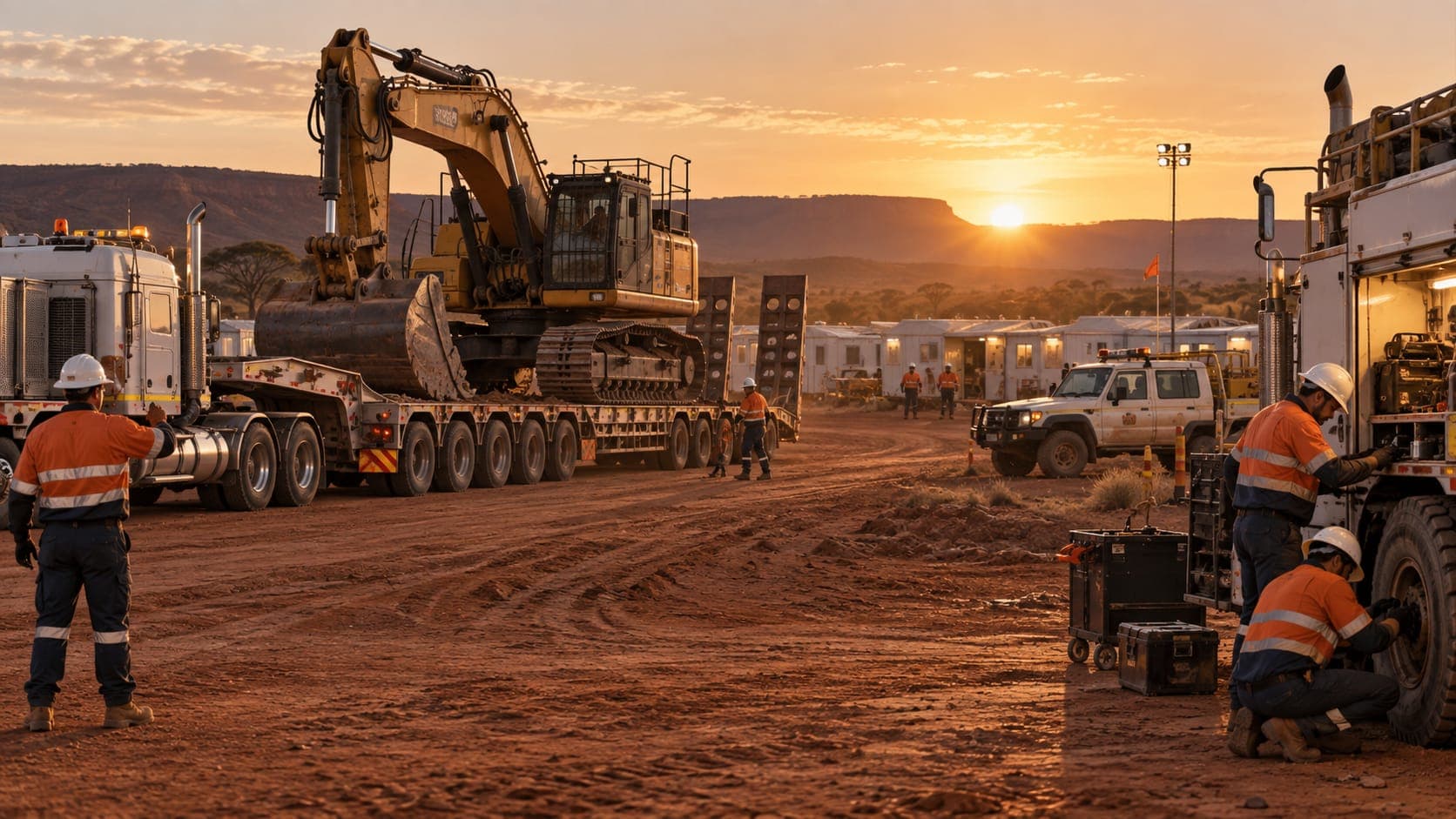
On remote projects, getting plant to site and keeping it running can cost as much as the hire itself. Mobilisation is a project within the project: permits, routes, escorts, fuel, accommodation and field support all need planning before the first float leaves the depot.
Editorial planning guidance with illustrative scenarios. No independent professional review is claimed. Read the authorship and evidence policy or report a correction.
Route survey and restrictions
Check the full route for bridge mass limits, low overhead structures, narrow sections, unsealed roads, floodways and seasonal closures. Remote access roads may be impassable after rain. A route survey for large or heavy loads identifies problems before they cost time on the road.
Permits and escorts
Oversize and overmass loads need permits. In most states and territories these are issued through the National Heavy Vehicle Regulator; Western Australia and the Northern Territory run their own heavy vehicle permit systems. Large loads may need pilot or escort vehicles and travel-time restrictions. Build permit lead times into the programme.
- Permit lead times and route approvals
- Pilot and escort vehicle requirements
- Travel curfews and holiday restrictions
- Cross-border permit differences
Fuel, water and accommodation
Confirm how fuel reaches site and how much storage is needed between deliveries. Bunded tanks, fuel trucks and refuelling procedures are part of the plan. Operators and fitters need somewhere to stay; camps, dongas and catering may need hiring alongside the plant.
Field servicing and spares
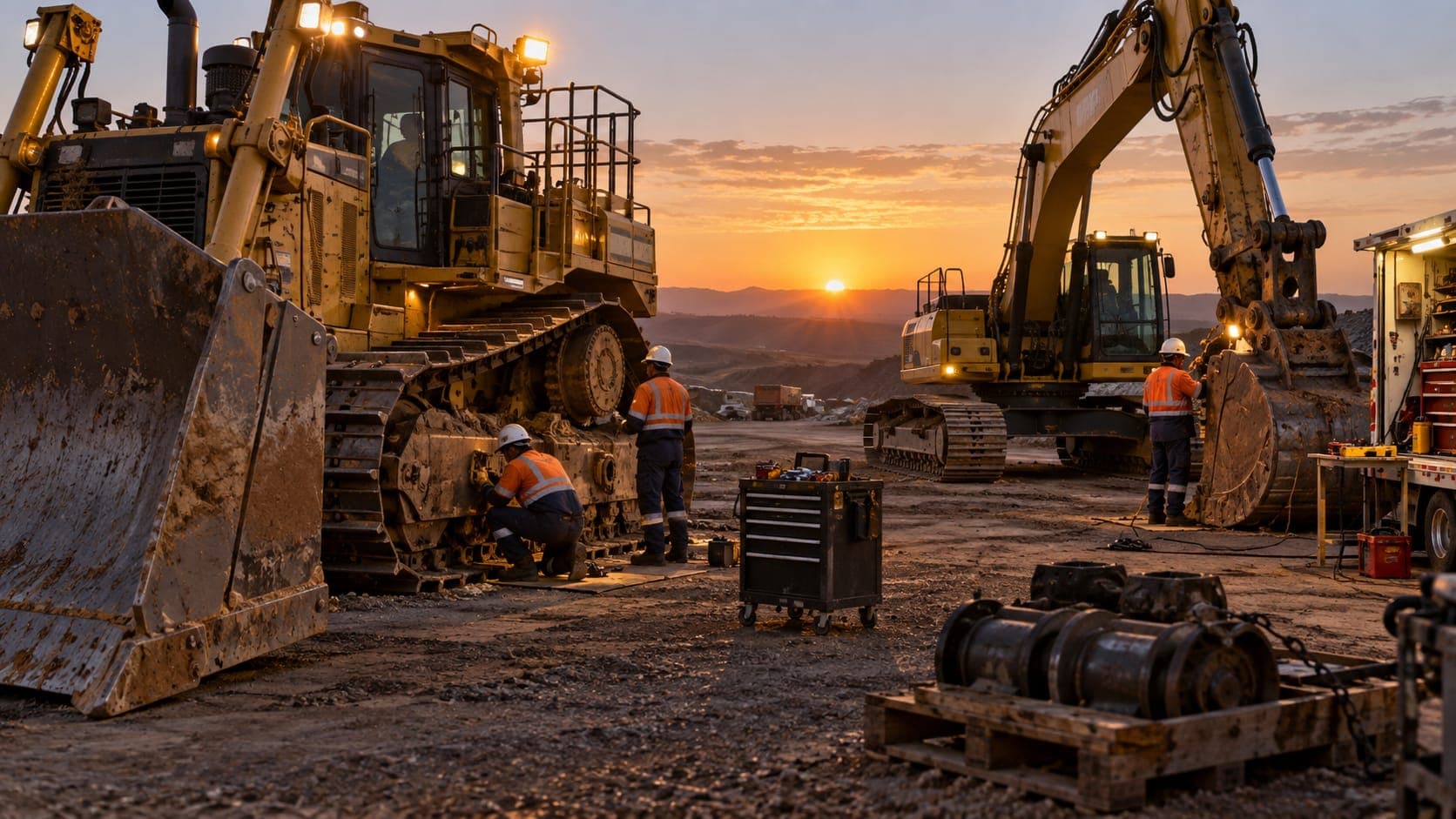
A breakdown hundreds of kilometres from a workshop can stop production for days. Ask suppliers where their nearest fitter is based, what critical spares they will keep on site, and whether a service vehicle will be stationed nearby. For critical machines, a standby unit may be cheaper than downtime.
Communication and emergency response
Mobile coverage is patchy or absent in many remote areas. Satellite phones, UHF radio and a clear emergency response plan are needed for crews and for plant recovery. Know the nearest medical facility and how an injured person would be evacuated.
Permits and heavy vehicle rules
Oversize and overmass (OSOM) movements are regulated under the Heavy Vehicle National Law in NSW, Victoria, Queensland, South Australia, Tasmania and the ACT, with permits administered by the National Heavy Vehicle Regulator (NHVR). Some movements that stay within set dimensions can travel under notices without an individual permit. Western Australia and the Northern Territory run their own systems through Main Roads WA and the NT Government respectively, so interstate moves into or out of those jurisdictions need separate approvals.
Requirements depend on width, length, height, mass and route. Wider loads may need pilot or escort vehicles and can be restricted to daylight hours, weekdays or specific routes. Public holiday travel restrictions are common. Build these into the mobilisation plan rather than assuming a float can leave any day.
| Movement | Project quote |
|---|---|
| Tilt tray or tag trailer (mini to 8 t) | Request a project-specific written quote |
| Semi low-loader float (to about 30 t) | Request a project-specific written quote |
| Oversize float with permits | Request a project-specific written quote |
| Pilot or escort vehicle | Request a project-specific written quote |
Regional and remote realities
Remote Australian projects often involve long distances on unsealed roads, river crossings and seasonal closures. In northern Australia the wet season can close roads for weeks. In desert regions, fuel and water supply points can be hundreds of kilometres apart. Station and pastoral lease access may require landholder permission and gate management.
Indigenous land access can also require permits or agreements, and cultural heritage clearances may apply to the work area and access routes. These are handled by the project proponent but affect when and where plant can move, so plant suppliers should be briefed on any restrictions.
- Check seasonal road closures and river crossing heights
- Confirm landholder or traditional owner access requirements
- Plan fuel stops and water sources along the route
- Carry recovery gear for vehicles and floats on unsealed roads
Accommodation and crew logistics
Remote crews often work on FIFO or DIDO rosters such as 2:1, 8:6 or 14:7. Accommodation might be a mining camp, a contractor-run camp, motels in the nearest town, or temporary dongas on site. Each option affects travel time, fatigue and cost. Clarify who provides and pays for accommodation, meals and travel before accepting a quote.
Worked example: mobilising a small fleet
Moving an excavator, a dozer, two articulated trucks and a service truck 800 km to a remote site might involve four or five float movements, permits for the larger machines, and possibly pilot vehicles. Add loading and unloading time, travel restrictions, and a day or two of site acceptance, and the mobilisation can take a week or more from depot to production.
Include return transport, cleaning and wash-down in the estimate from the start. On some projects, mobilisation and demobilisation together are a material share of the plant budget.
Questions to ask suppliers
Before accepting a remote mobilisation quote, confirm:
- What is included in the mobilisation price, and what is charged separately?
- Who applies for permits and arranges escorts?
- Where is your nearest fitter and parts store to our site?
- What spares and consumables will you send with the fleet?
- How are travel days for operators and fitters charged?
Illustrative scenario: moving a small fleet to the Pilbara
A civil contractor wins a six-month access road job near a Pilbara mine. The fleet — a 30-tonne excavator, D6 dozer, 14-class grader, two ADTs, a roller and water cart — must travel about 1,500 km from Perth.
The transport company applies for permits through Main Roads WA, plans pilot vehicles for the widest loads and schedules travel to avoid restricted times. Machines are cleaned for biosecurity before leaving. On arrival, the mine inspects each machine and the contractor completes site inductions and medicals. Mobilisation takes about ten days from depot to production, and the contractor prices it as a separate lump sum.
Sample supplier brief
A short written brief gets faster, more comparable quotes. Adapt this example to your job:
“We need to mobilise a 30-tonne excavator, D6 dozer, 14-class grader, two 30-tonne ADTs, a roller and a water cart from Perth to a site near Newman, WA, arriving on 1 June. Machine dimensions and weights are attached.”
“Please quote transport including permits through Main Roads WA, pilots, travel restrictions, biosecurity cleaning, and return transport. Also confirm your fitter coverage in the region and the critical spares you would send with the fleet.”
Common questions
Who issues oversize permits for plant transport?
In most states the National Heavy Vehicle Regulator. Western Australia and the Northern Territory operate their own permit systems. The transport company usually applies.
Should I pay for a standby machine on a remote job?
Often yes for critical plant. Compare the standby cost with the cost of days of lost production while a replacement is sourced and transported.
This guide is general information to help you prepare a better enquiry. It is not engineering, legal or safety advice. Equipment selection, engineering and safe systems of work remain the responsibility of competent project and supplier teams, and regulatory requirements differ between states and sites.