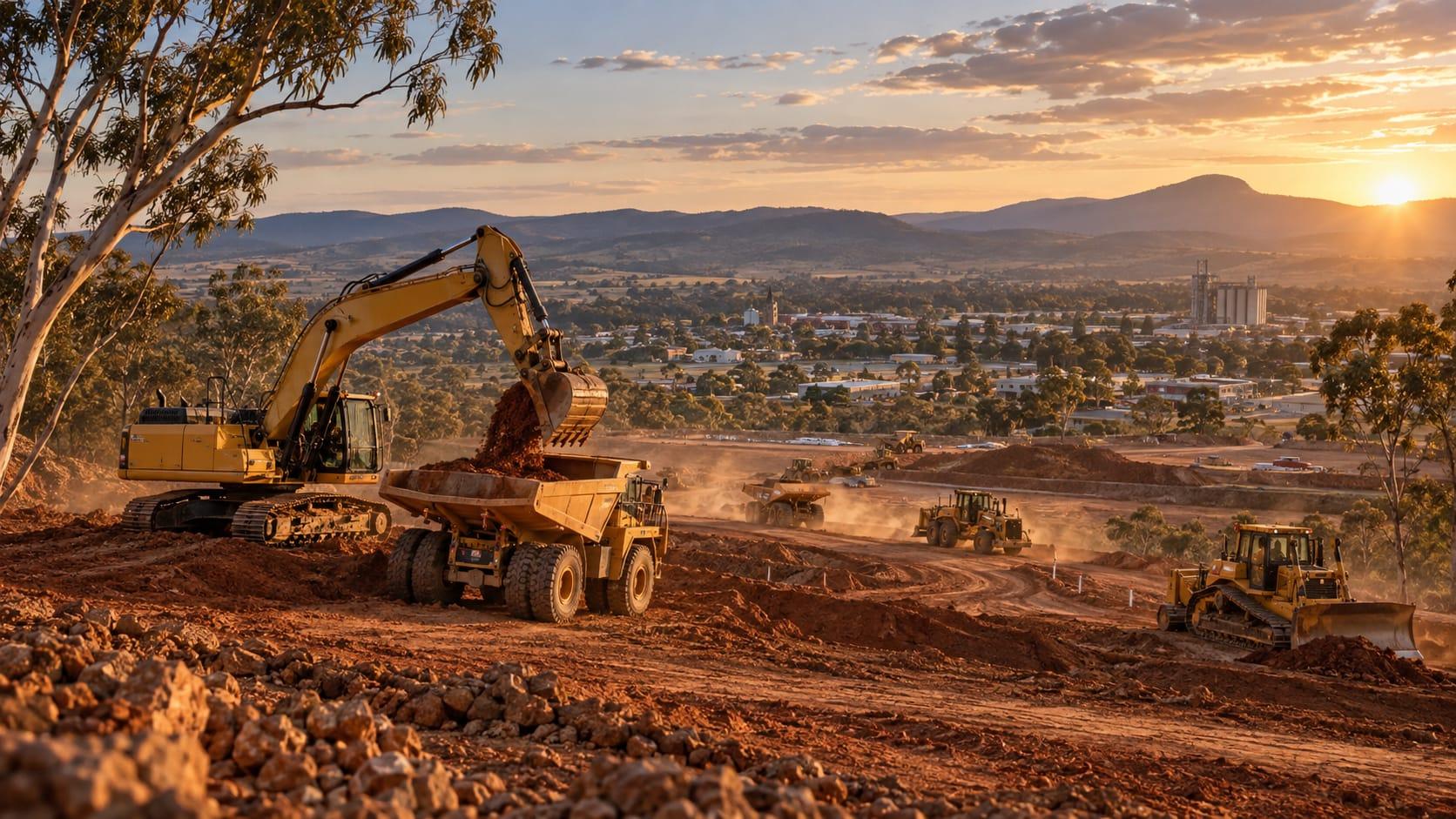
Rain can stop earthworks for days. Wet material cannot be compacted, haul roads become unsafe, and machines bog. Wet-season projects in northern Australia and winter work in the south both need a plan for rain: when to stop, how to protect the work, and when to start again.
Editorial planning guidance with illustrative scenarios. No independent professional review is claimed. Read the authorship and evidence policy or report a correction.
Set clear triggers
Agree in advance the conditions that stop work, such as rainfall amounts, haul road condition or material moisture. Clear triggers avoid arguments and keep people safe.
Protect the work
Seal or roll exposed fill surfaces before rain, shape surfaces to shed water, keep drains and sediment controls working, and protect access roads. Work that is protected can often restart sooner.
- Seal-roll fill surfaces before rain
- Maintain drains and sediment controls
- Shape haul roads to shed water
- Pumps ready for excavations
Choose suitable plant
Articulated dump trucks, tracked machines and LGP dozers cope better with wet ground. Pumps are needed for excavations. A grader and roller are vital for reopening haul roads.
Agree standby and restart
Agree standby terms for wet days before the job starts. Define restart criteria, such as haul road condition or material moisture testing, so work resumes as soon as it is safe.
Wet seasons and wet winters
Northern Australia has a distinct wet season, roughly November to April, with monsoonal rain and cyclones that can close roads and sites for extended periods. Southern Australia has wetter winters, with long periods of drizzle that keep clay soils wet. Eastern Australia is also affected by La Niña cycles, which bring above-average rainfall and flooding over large areas.
Programmes for earthworks in these regions should allow for lost days based on historical rainfall, which can be estimated from Bureau of Meteorology data for the nearest station. Many contracts allow extensions of time for rain days above an agreed number.
Keeping earthworks workable
The most effective wet-weather controls are preventive: shaping fill surfaces to shed water, seal-rolling at the end of each shift when rain is forecast, keeping drains and sediment basins clear, and protecting stockpiles. Haul roads should be crowned and drained, with a sacrificial wearing course where possible.
After rain, restart depends on moisture content. Material that is too wet may need to be dried by spreading and turning, stabilised with lime, or replaced. Each option costs time and money, which is why protecting the work before rain is usually cheaper.
- Track Bureau of Meteorology forecasts daily
- Seal-roll fill before forecast rain
- Keep a grader available to reopen haul roads
- Test moisture before recommencing compaction
Pumps and water management plant
Wet weather often means pumping. Common hire options include 3- to 6-inch diesel pumps for general dewatering, submersible pumps for sumps, and larger pumps for flood response. Sediment-laden water may need settling or flocculation before discharge, depending on environmental conditions. Keep pumps fuelled and checked daily during wet periods.
What it means for the hire agreement
Wet-weather clauses are among the most negotiated parts of a hire agreement. Common approaches include reduced standby rates, minimum hours, or no charge with sufficient notice. Agree how a wet day is declared, who makes the call, and how much notice is needed to stand plant down.
For long wet seasons, consider whether it is cheaper to demobilise plant and bring it back, or to keep it on site on standby. Model both options against the expected rainfall pattern.
Common mistakes
Leaving fill surfaces loose before rain, letting drains block, and trafficking wet haul roads can turn a short delay into days of lost time. Another mistake is restarting too early and damaging the work.
Protect the site before rain and agree restart criteria in advance.
Questions to ask suppliers
Before the wet season, ask:
- What standby rates apply on wet days?
- Do you have wet-weather suitable plant, such as articulated trucks and LGP dozers?
- Can you supply pumps at short notice?
- How quickly can you restart after rain?
Environmental controls in wet weather
Rain carries sediment off exposed earthworks and into drains and waterways. Most projects operate under an erosion and sediment control plan, and state environmental regulators can issue penalties for pollution. Before forecast rain, check sediment fences, basins and drains, and stabilise exposed areas where possible. After rain, inspect controls and repair damage before restarting.
Settled or treated water from sediment basins may need testing before release, depending on project conditions.
Plant can help or hinder. Keep machines off freshly shaped batters and drains, limit traffic to designated haul roads, and park plant on firm, high ground away from waterways before heavy rain. Refuelling should stop in areas that could flood, and fuel containers should be secured so they are not washed away. After a major storm, check that machines parked overnight have not been affected by floodwater before starting them.
Illustrative scenario: a wet-season civil job in the Top End
A civil contractor in the Northern Territory plans a drainage and road project to finish before the wet season, but delays push work into November. The contractor seal-rolls fill each afternoon when storms are forecast, keeps drains clear and has pumps ready for excavations.
When heavy rain closes the site for several days, machines are parked on high ground and put on standby under the agreed terms. The contractor restarts only when haul roads are trafficable and material moisture tests are within specification, avoiding damage to completed work.
Sample supplier brief
A short written brief gets faster, more comparable quotes. Adapt this example to your job:
“We need earthworks plant for a drainage and road project near Darwin, NT, that may run into the start of the wet season. Please propose machines suited to wet ground, including articulated trucks and LGP dozers where appropriate, and pumps for excavations.”
“State your wet-weather standby terms, notice required, and whether you would recommend demobilising during extended rain. We will seal-roll fill before forecast storms and restart only when haul roads are trafficable.”
Common questions
Can earthworks be compacted after rain?
Only when the material is back within the specified moisture range. That may require drying, mixing or replacing wet material.
What is seal rolling?
Rolling the surface of fill with a smooth drum roller before rain so water runs off rather than soaking in.
When is the wet season in northern Australia?
Roughly November to April, although timing and intensity vary from year to year.
What is an extension of time for rain?
Many construction contracts allow extra time when rain days exceed an agreed number. Check your contract for the rule and record rain days carefully.
This guide is general information to help you prepare a better enquiry. It is not engineering, legal or safety advice. Equipment selection, engineering and safe systems of work remain the responsibility of competent project and supplier teams, and regulatory requirements differ between states and sites.